
2D6 Probability Chart
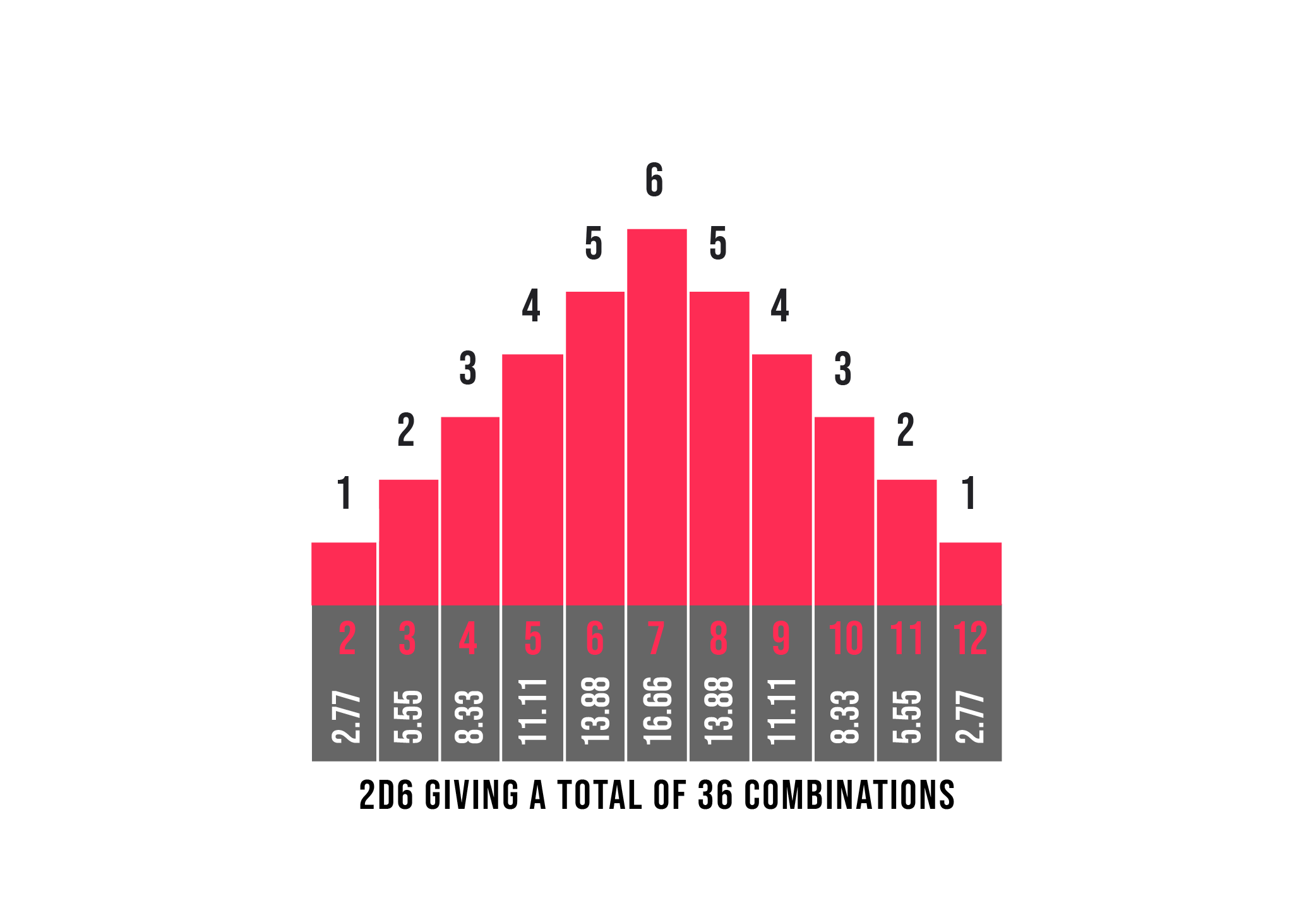
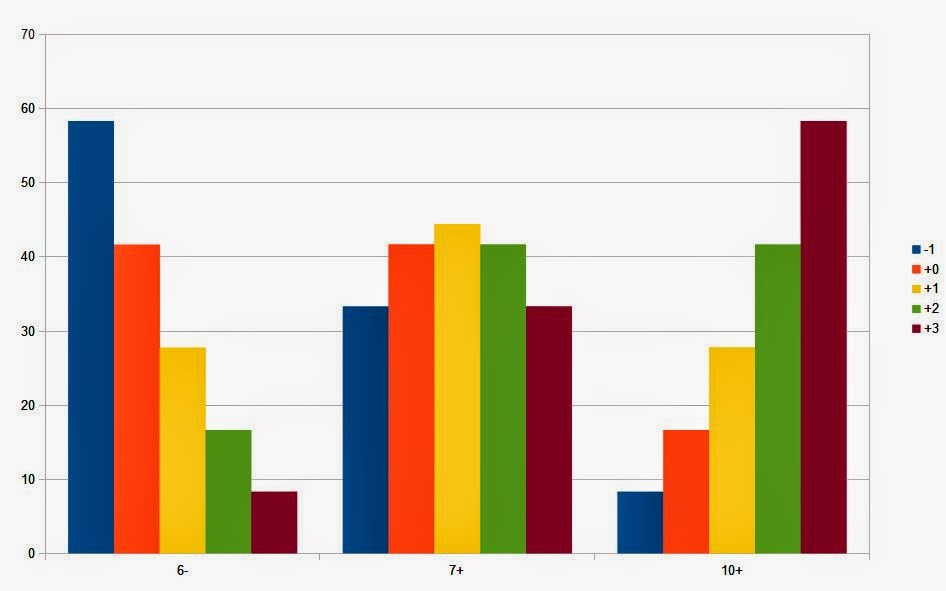
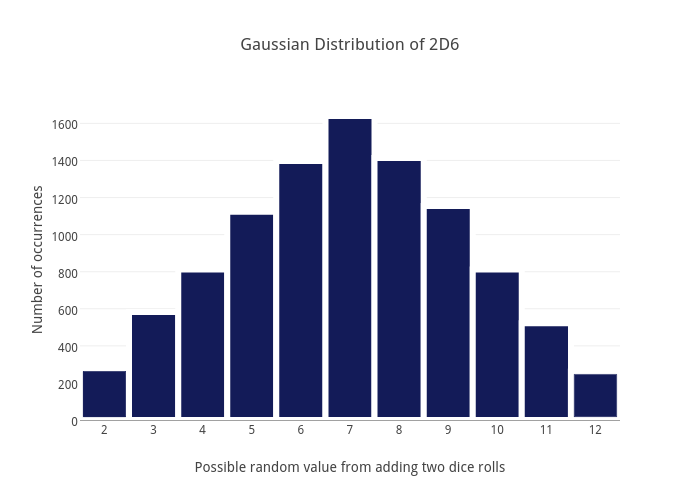
2D6 Probability Chart - I took my results on www.anydice.com Web the following tables show the chances of attaining various rolls on a number of d6 rolls. Web when calculating the probability of the outcome of rolling 2d6, most sources use the table, 2: Web with dicegraph, you can model the outcome of a monster’s attacks against a given player, and see if the probability of potential damage is acceptable—or if it sends you running. The first column shows the result, the second column the number of permutations for a given. Web this table shows the percentage chance of rolling a particular number or higher for each type of polyhedral die. Web there are 6 possible ways of rolling doubles on 2d6 out of a possible 36 combinations, so (1/(6*6))*6 = 0.167, or a 17ish percent chance of rolling a double. So 2d6 has a slight edge in expected damage. Calculate any type of dice roll probability for different numbers of dice and sides. See the probability chart for two dice and the formula for any number of dice. Here's a more intuitive method to get the same. Maybe it will be useful for others! See how 7 is the most common roll and 2 and 12 are the least likely. Various values are more or less likely to. Web use 6 sided dice probability calculator to find the likelihood of rolling numerous numbers sets with standard cubic dice. I took my results on www.anydice.com Web the troll dice roller and probability calculator prints out the probability distribution (pmf, histogram, and optionally cdf or ccdf), mean, spread, and mean. Web statistically determine how well dice will roll given a specific combination of dice. 10d6 we can find by convolving the 5d6 table with itself. Web we can calculate the probability table for 20d6 by convolving the table for 10d6 with itself. So 2d6 has a slight edge in expected damage. The first column shows the result, the second column the number of permutations for a given. Web how to read the charts example: Here's a more intuitive method to get the same. With the 2d6 system, converting to a percentage is not so easy. Web the following tables show the chances of attaining various rolls on a number of d6 rolls. Web statistically determine how well dice will roll given a specific combination of dice. Web i made this table on the odds of results of 2d6 + modifiers to see if i impose a maximum in my game. Web there are 6 possible. Web we can calculate the probability table for 20d6 by convolving the table for 10d6 with itself. Web with dicegraph, you can model the outcome of a monster’s attacks against a given player, and see if the probability of potential damage is acceptable—or if it sends you running. Green is 2d6 and reroll the charge (both dice). Web use 6. Calculate any type of dice roll probability for different numbers of dice and sides. So 2d6 has a slight edge in expected damage. Web the following tables show the chances of attaining various rolls on a number of d6 rolls. Maybe it will be useful for others! Web the troll dice roller and probability calculator prints out the probability distribution. With total mods of +3, rolling 2d6 gives you a 58% chance of outright success, a 33% chance of partial success and an 8% chance of failure. 10d6 we can find by convolving the 5d6 table with itself. Web how to read the charts example: I took my results on www.anydice.com Web the troll dice roller and probability calculator prints. Web statistically determine how well dice will roll given a specific combination of dice. I took my results on www.anydice.com With the 2d6 system, converting to a percentage is not so easy. Here's a more intuitive method to get the same. Web what is the probability of rolling a double 6? Web from this plot, we can read that the probability of rolling at least two identical values on 5d6 is 90.74%, while the probability of rolling at least 3 identical values is. Web based on these probability tables, we can calculate that 2d6 averages 7 damage, while 1d12 averages 6.5. Various values are more or less likely to. Web statistically. Calculate any type of dice roll probability for different numbers of dice and sides. See the probability chart for two dice and the formula for any number of dice. See how 7 is the most common roll and 2 and 12 are the least likely. Web from this plot, we can read that the probability of rolling at least two. Various values are more or less likely to. So 2d6 has a slight edge in expected damage. Here's a more intuitive method to get the same. Green is 2d6 and reroll the charge (both dice). See the probability chart for two dice and the formula for any number of dice. Web the troll dice roller and probability calculator prints out the probability distribution (pmf, histogram, and optionally cdf or ccdf), mean, spread, and mean. See how 7 is the most common roll and 2 and 12 are the least likely. Web we can calculate the probability table for 20d6 by convolving the table for 10d6 with itself. Web there are. Maybe it will be useful for others! Green is 2d6 and reroll the charge (both dice). Web based on these probability tables, we can calculate that 2d6 averages 7 damage, while 1d12 averages 6.5. Web i made this table on the odds of results of 2d6 + modifiers to see if i impose a maximum in my game. Web from this plot, we can read that the probability of rolling at least two identical values on 5d6 is 90.74%, while the probability of rolling at least 3 identical values is. Web when calculating the probability of the outcome of rolling 2d6, most sources use the table, 2: Web this table shows the percentage chance of rolling a particular number or higher for each type of polyhedral die. Web statistically determine how well dice will roll given a specific combination of dice. Web use 6 sided dice probability calculator to find the likelihood of rolling numerous numbers sets with standard cubic dice. I took my results on www.anydice.com With total mods of +3, rolling 2d6 gives you a 58% chance of outright success, a 33% chance of partial success and an 8% chance of failure. 10d6 we can find by convolving the 5d6 table with itself. Web the following tables show the chances of attaining various rolls on a number of d6 rolls. See how 7 is the most common roll and 2 and 12 are the least likely. With the 2d6 system, converting to a percentage is not so easy. Here's a more intuitive method to get the same.
Quantifying Strategy

The Other Side blog Unisystem 2d6
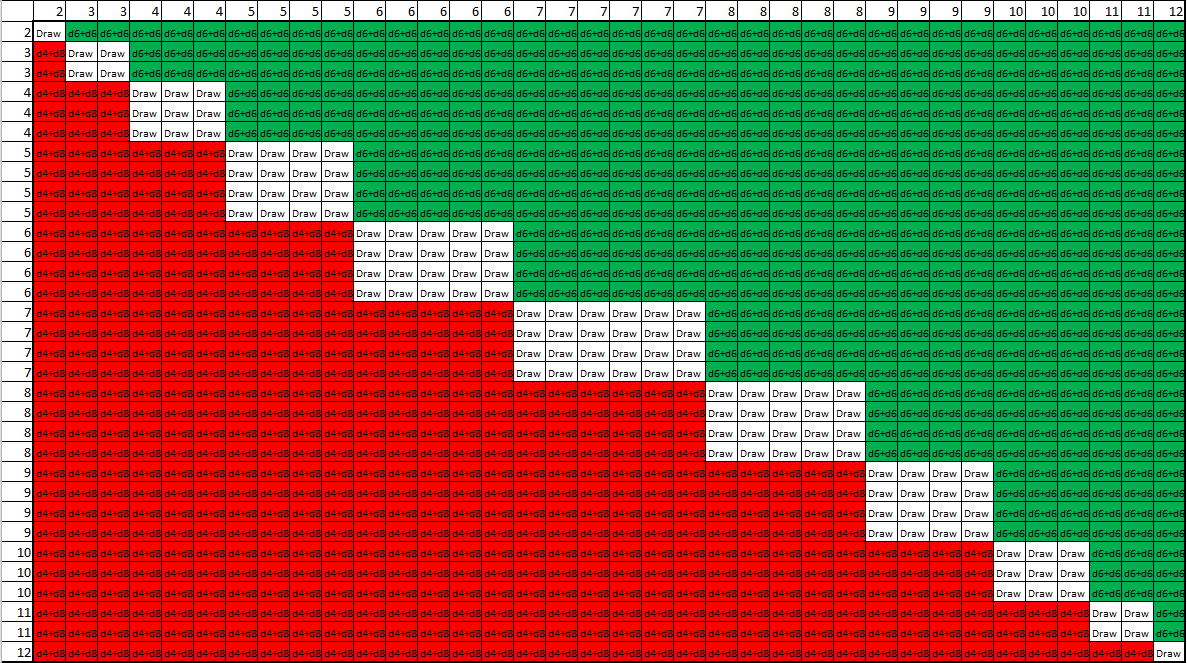
2d6 or d4+d8 —

Delta's D&D Hotspot Exploding Dice Statistics

The Other Side blog Unisystem 2d6

Mathhammer Tables for Charge Ranges, 2d6, 2d6 from DS, 2d6 with Rerolls
2D6 Probabilities The Dark Fortress
Probabilities of 2d6 with common PbtA modifiers
Gaussian Distribution of 2D6 histogram made by Joonyeechuah plotly

Probabilities of 2d6 Compared to d6 Dice Pools Troy Press
Web There Are 6 Possible Ways Of Rolling Doubles On 2D6 Out Of A Possible 36 Combinations, So (1/(6*6))*6 = 0.167, Or A 17Ish Percent Chance Of Rolling A Double.
See The Probability Chart For Two Dice And The Formula For Any Number Of Dice.
Web With Dicegraph, You Can Model The Outcome Of A Monster’s Attacks Against A Given Player, And See If The Probability Of Potential Damage Is Acceptable—Or If It Sends You Running.
So 2D6 Has A Slight Edge In Expected Damage.
Related Post: