
Ate Ite Ide Chart
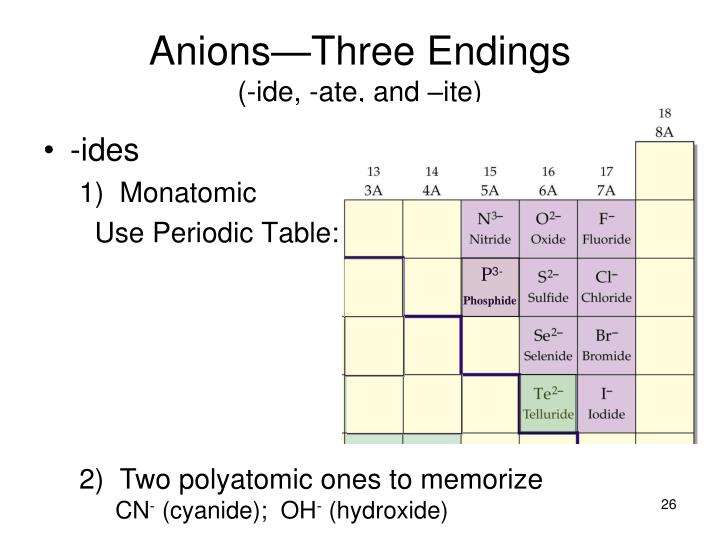
Ate Ite Ide Chart - Let's say below is what you see written: Some polyatomic anions contain oxygen. When an element forms two. For example, chlorine forms a chloride ion, so nacl is sodium chloride. Ending (suffix) is only for polyatomic anions that contain oxygen, when the polyatomic ion is contained in the following: Web flow chart for naming simple inorganic compounds. It doesn't denote a specific number. It is the suffix of the. The flowchart is adapted from p. Web so you see, there's a big difference between ending with ide or with ate. Ending (suffix) is only for polyatomic anions that contain oxygen, when the polyatomic ion is contained in the following: These anions are called oxyanions. When an element forms two. The flowchart is adapted from p. It is the suffix of the. Web terms in this set (30) study with quizlet and memorize flashcards containing terms like ammonium, acetate, bromate and more. Web flow chart for naming simple inorganic compounds. Some polyatomic anions contain oxygen. For example, chlorine forms a chloride ion, so nacl is sodium chloride. Let's say below is what you see written: Web flow chart for naming simple inorganic compounds. So no2 would be nitrite, and no3 would be. Ending (suffix) is only for polyatomic anions that contain oxygen, when the polyatomic ion is contained in the following: Some polyatomic anions contain oxygen. So, no2 is nitrite, and. It doesn't denote a specific number. Some polyatomic anions contain oxygen. Ending (suffix) is only for polyatomic anions that contain oxygen, when the polyatomic ion is contained in the following: Learning a language means paying attention to patterns. The flowchart is adapted from p. For example, chlorine forms a chloride ion, so nacl is sodium chloride. These anions are called oxyanions. Web flow chart for naming simple inorganic compounds. The flowchart is adapted from p. Learning a language means paying attention to patterns. It is the suffix of the. Ending (suffix) is only for polyatomic anions that contain oxygen, when the polyatomic ion is contained in the following: When an element forms two. It doesn't denote a specific number. Some polyatomic anions contain oxygen. For example, chlorine forms a chloride ion, so nacl is sodium chloride. Let's say below is what you see written: When an element forms two. Web so you see, there's a big difference between ending with ide or with ate. It doesn't denote a specific number. It doesn't denote a specific number. Learning a language means paying attention to patterns. Let's say below is what you see written: It is the suffix of the. Some polyatomic anions contain oxygen. So no2 would be nitrite, and no3 would be. For example, chlorine forms a chloride ion, so nacl is sodium chloride. Learning a language means paying attention to patterns. It doesn't denote a specific number. The flowchart is adapted from p. It is the suffix of the. Ending (suffix) is only for polyatomic anions that contain oxygen, when the polyatomic ion is contained in the following: It doesn't denote a specific number. These anions are called oxyanions. Web flow chart for naming simple inorganic compounds. The flowchart is adapted from p. Learning a language means paying attention to patterns. Web flow chart for naming simple inorganic compounds. These anions are called oxyanions. It doesn't denote a specific number. Web so you see, there's a big difference between ending with ide or with ate. Some polyatomic anions contain oxygen. Web terms in this set (30) study with quizlet and memorize flashcards containing terms like ammonium, acetate, bromate and more. The flowchart is adapted from p. It is the suffix of the. The flowchart is adapted from p. These anions are called oxyanions. Let's say below is what you see written: Web terms in this set (30) study with quizlet and memorize flashcards containing terms like ammonium, acetate, bromate and more. Learning a language means paying attention to patterns. So, no2 is nitrite, and. Web flow chart for naming simple inorganic compounds. Web so you see, there's a big difference between ending with ide or with ate. Some polyatomic anions contain oxygen. For example, chlorine forms a chloride ion, so nacl is sodium chloride. It is the suffix of the. It doesn't denote a specific number.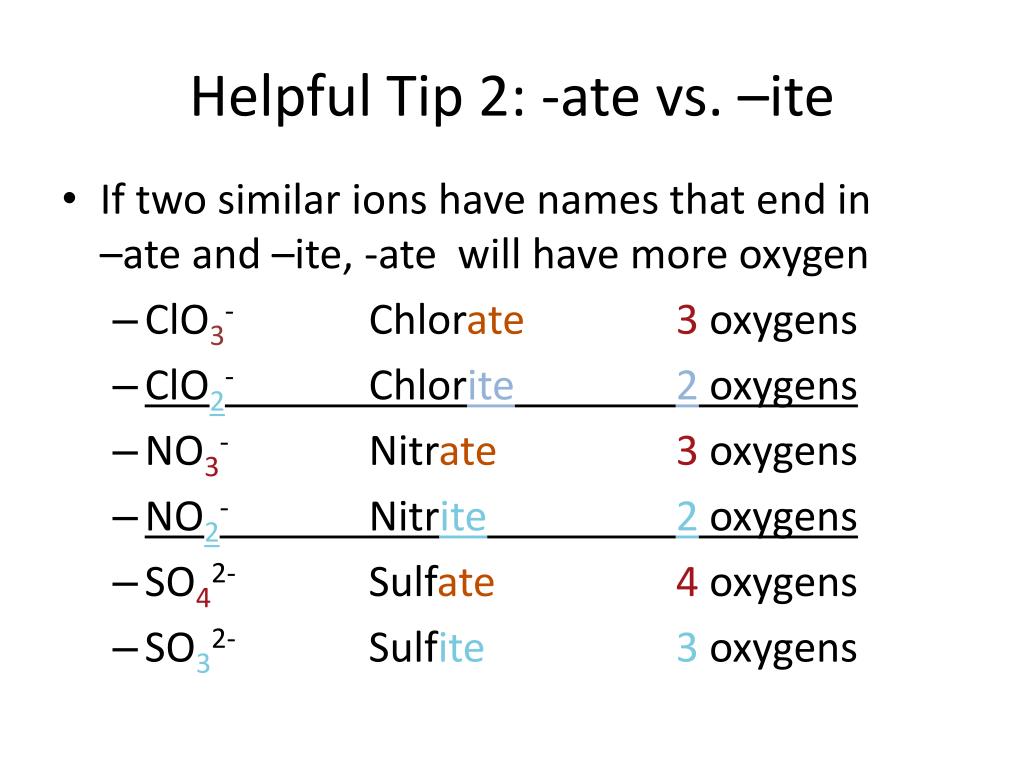
PPT Guide to Naming Ionic Compounds PowerPoint Presentation, free
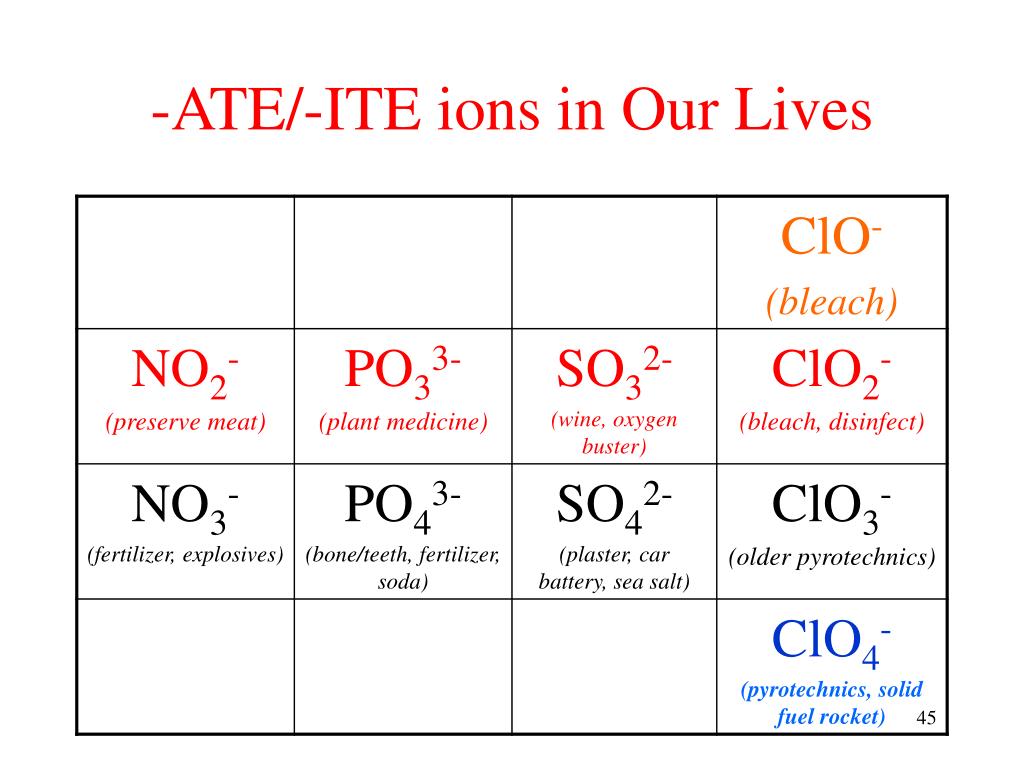
PPT Molecules and Compounds Nomenclature PowerPoint Presentation

ide ite ate YouTube

Ate Ite Ide Chart

Formula Making of Anions with suffix ide, ate, ite ( With Trick

HOW TO USE NOMENCLATURE YouTube

Ate Ite Ide Chart
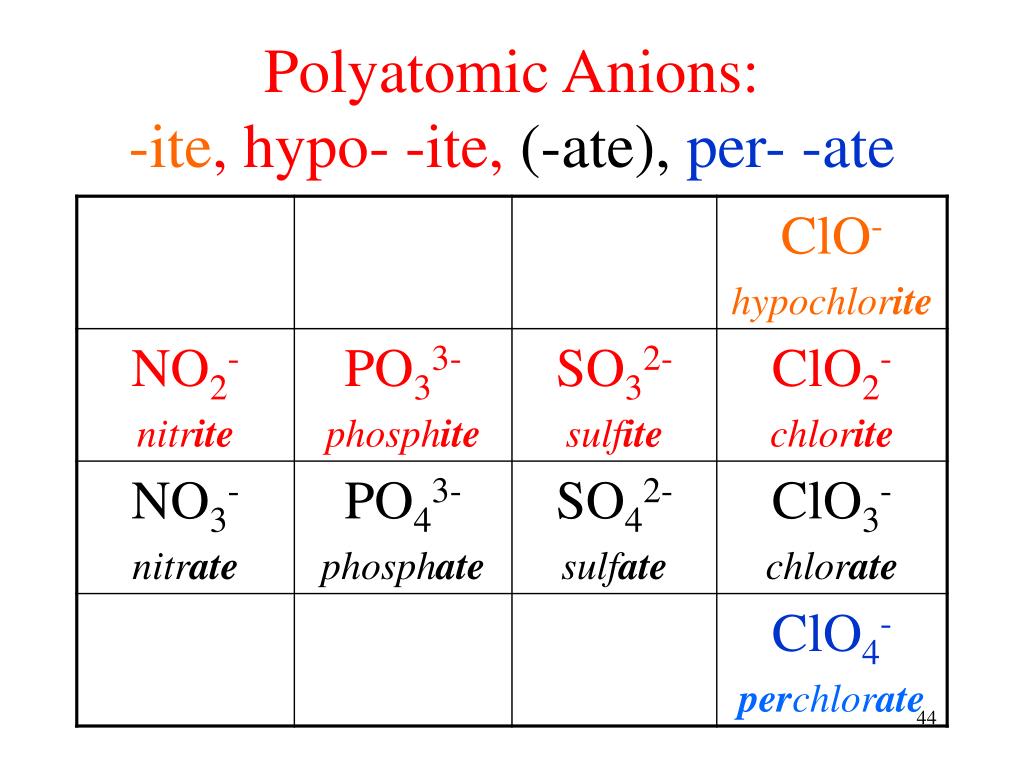
PPT Molecules and Compounds Nomenclature PowerPoint Presentation
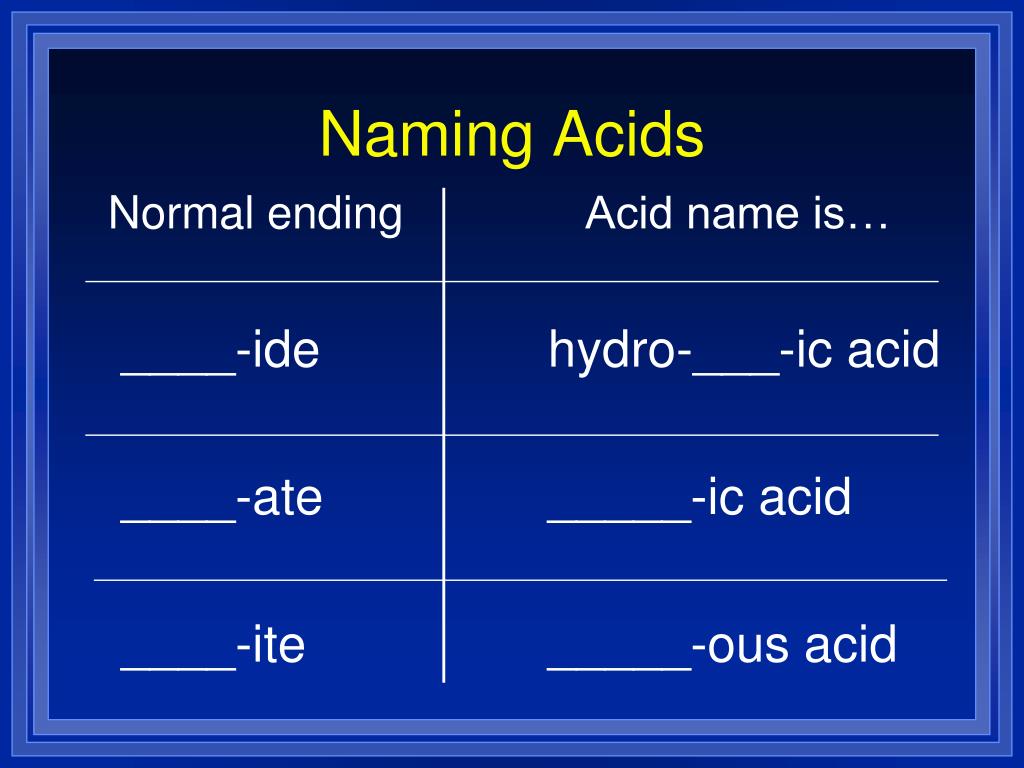
PPT Chapter 6 “Chemical Names and Formulas” PowerPoint Presentation
PPT Breakdown of Topics PowerPoint Presentation ID6209332
So No2 Would Be Nitrite, And No3 Would Be.
When An Element Forms Two.
Ending (Suffix) Is Only For Polyatomic Anions That Contain Oxygen, When The Polyatomic Ion Is Contained In The Following:
Related Post: