
Conversion Charts For Chemistry
Conversion Charts For Chemistry - Web the conversion relations in this table are commonly used to equate masses and weight assuming a nominal value for g at the surface of the earth. Web the following equation is used for calculating acid and base molarity where the concentration is given in wt %: Web interactive periodic table and chemistry reference with an incredibly fast work flow. Three basic units of measurement length, mass (weight), volume. 1 in = 2.540 cm. Web what is a conversion factor in chemistry? Web english to metric conversions. Geekmajor absentmindedly measures the mass of a sample to be 0.75 lb and records his measurement in his lab notebook. Web therefore, the exact relationship of btu to joules and other energy units depends on the temperature at which btu is measured. Web unit converters (aka unit calculators) are tools that allow to convert between different units of measurement for the same quantity. Web unit converters (aka unit calculators) are tools that allow to convert between different units of measurement for the same quantity. Web the first step in the procedure is to identify the unit for the value we want to calculate. Learn how to do chemistry unit conversions and review the most common units of measurement and conversion factors. Metric and the international system of units (système international or si) are measurement systems consisting of base units and prefixes. Are equivalent (by definition), and so a unit conversion factor may be derived from the ratio, See the conversion factor chart. The following table includes some useful conversion factors. Full featured with data, trends, display modes, and conversions. We write this on the left side of an equals sign. The (si) contains seven base units that each represent a different kind of physical quantity. Web what is a conversion factor in chemistry? The meter defined as the length of the path traveled by light in vacuum during a time interval of 1/299,792,458 of a second. The basic unit of mass (weight) is: Learn how to do chemistry unit conversions and review the most common units of measurement and conversion factors. See the conversion factor. 1 in = 2.540 cm. [ (% × d) / mw] × 10 = molarity. Mw = molecular weight (or formula weight). These reference tables show the different bases and prefixes used to designate metric units with the si system. Web a ratio of two equivalent quantities expressed with different measurement units can be used as a unit conversion factor. For example, the lengths of 2.54 cm and 1 in. See the conversion factor chart. Web the conversion relations in this table are commonly used to equate masses and weight assuming a nominal value for g at the surface of the earth. Web therefore, the exact relationship of btu to joules and other energy units depends on the temperature at. Web a ratio of two equivalent quantities expressed with different measurement units can be used as a unit conversion factor. The only difference is the conversion factor used. The meter defined as the length of the path traveled by light in vacuum during a time interval of 1/299,792,458 of a second. Web conversion factors can also be constructed for converting. Units in the first column are generally not used in nist publications except those that are italicized. The following table includes some useful conversion factors. Bold values indicate exact conversion values. Web interactive periodic table and chemistry reference with an incredibly fast work flow. These reference tables show the different bases and prefixes used to designate metric units with the. Web unit converters (aka unit calculators) are tools that allow to convert between different units of measurement for the same quantity. Web a conversion factor is a factor used to convert one unit of measurement into another. Web si and metric measurement systems. This is the most complete collection of unit converters with 39 different physical quantities supported. The only. The meter defined as the length of the path traveled by light in vacuum during a time interval of 1/299,792,458 of a second. Oz is a mass unit and fl oz is a volume unit in the english system. Web si and metric measurement systems. Web basic conversion cheat sheet. A simple conversion factor can convert meters into centimeters, or. 1 in = 2.540 cm. Web si and metric measurement systems. Units in the first column are generally not used in nist publications except those that are italicized. The above equation can then be used to calculate the molarity of the 70 wt % nitric acid: 59 °f (15 °c) is the most widely used reference temperature for btu definition. 2 btu is the amount of energy needed to heat one pound of water by one degree fahrenheit. Consider mercury, which is a liquid at room temperature and has a density of 13.6 g/ml. The basic unit of mass (weight) is: Web therefore, the exact relationship of btu to joules and other energy units depends on the temperature at which. Web the only math skills you need to do unit conversions are addition, subtraction, multiplication, and division. Consider mercury, which is a liquid at room temperature and has a density of 13.6 g/ml. Web c si units and conversions. Mw = molecular weight (or formula weight). Web what is a conversion factor in chemistry? Web a conversion factor is a factor used to convert one unit of measurement into another. The following table includes some useful conversion factors. Web the only math skills you need to do unit conversions are addition, subtraction, multiplication, and division. The basic unit of length is: For example, density can be used to convert between the mass and the volume of a substance. (mass, length, volume, and area conversions are good to 4 significant figures) mass. 1 in = 2.540 cm. Web si and metric measurement systems. Geekmajor absentmindedly measures the mass of a sample to be 0.75 lb and records his measurement in his lab notebook. Mw = molecular weight (or formula weight). This is the most complete collection of unit converters with 39 different physical quantities supported. Below is a table of conversion factors. These base si units can be combined with any of the prefixes to create units that are most appropriate for what is. The above equation can then be used to calculate the molarity of the 70 wt % nitric acid: The (si) contains seven base units that each represent a different kind of physical quantity. Learn how to do conversions between two units in chemistry using conversion factors.
Printable Metric Conversion Chart For Chemistry
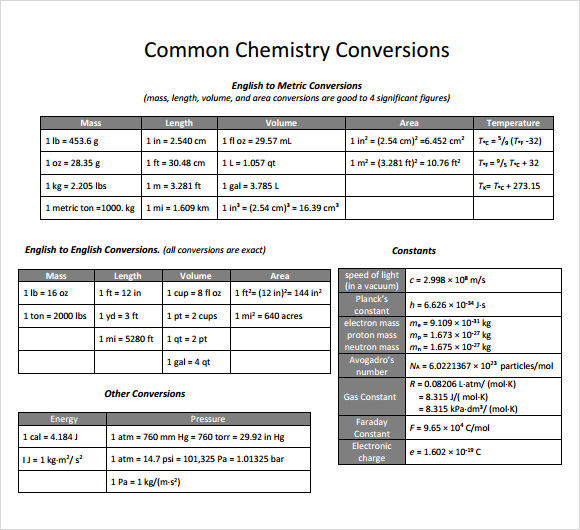
FREE 30+ Sample Metric Conversion Chart Templates in PDF, Excel, Word

Conversion Chart Mrs. McGuire's Chemistry

Si Unit Conversion Chart

Printable Chemistry Conversion Chart

Metric System Chemistry Unit Conversion Chart leafonsand
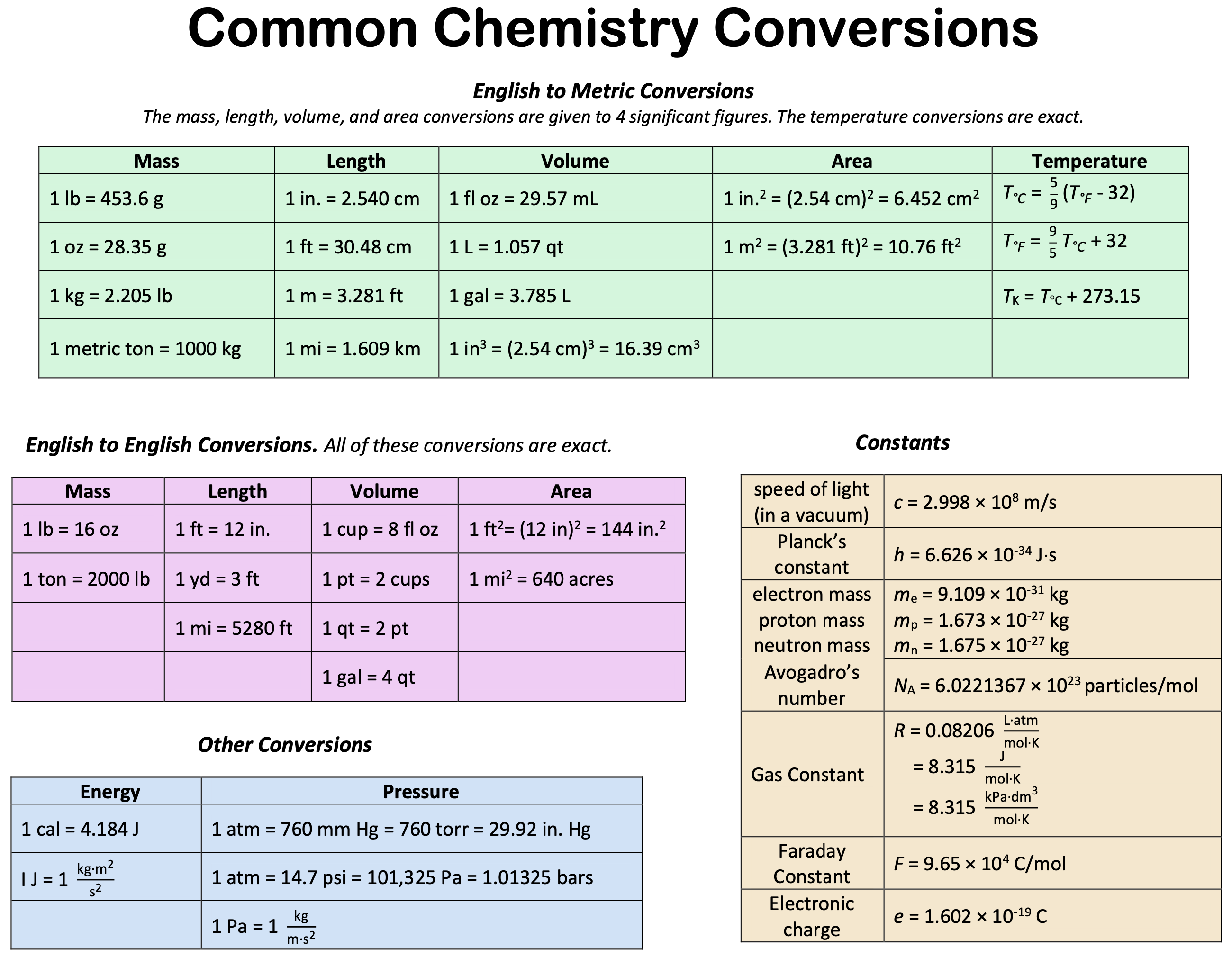
Conversions and Constants Chemistry LibreTexts
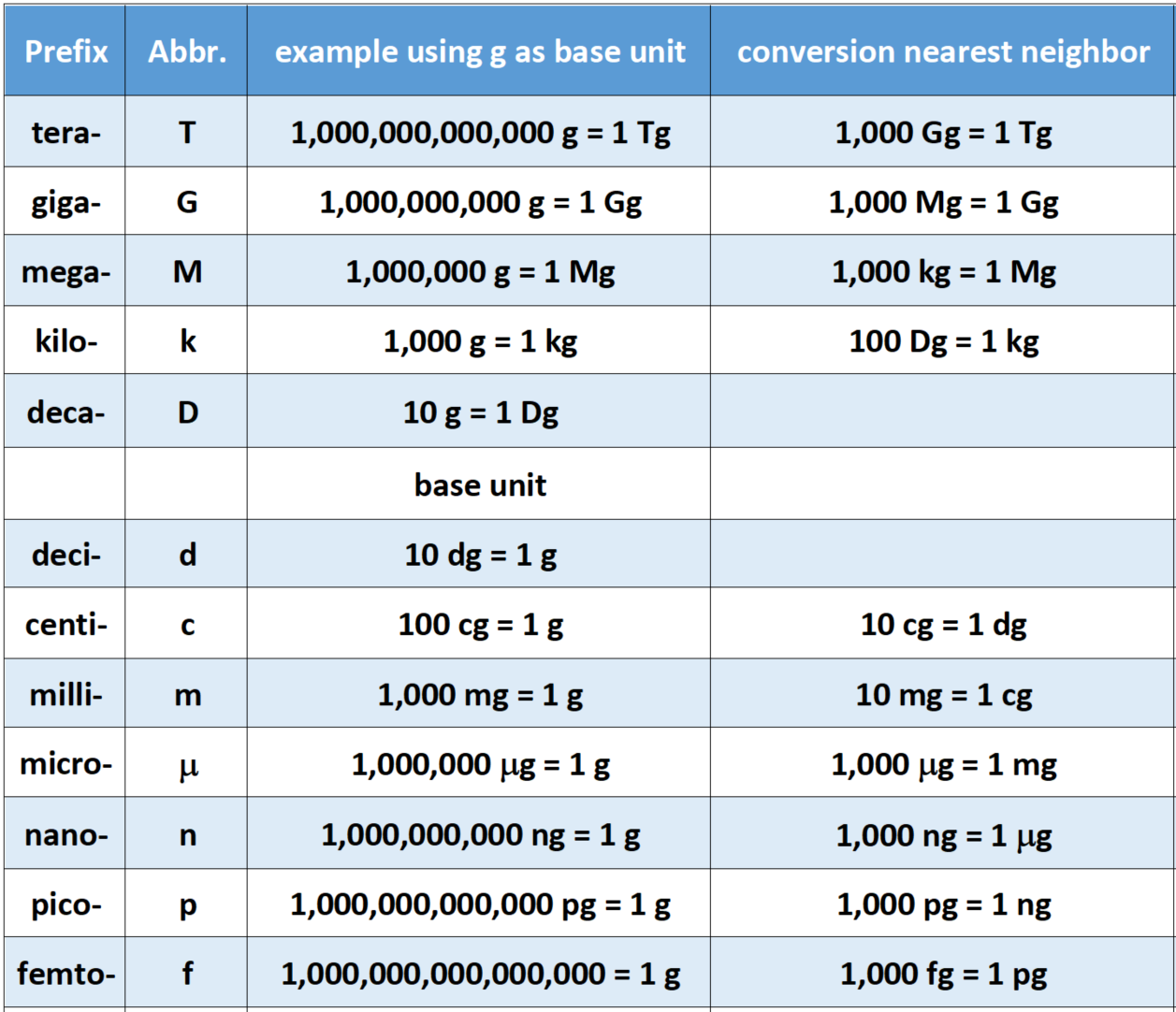
CH103 CHAPTER 1 Math for Allied Health Chemistry Chemistry
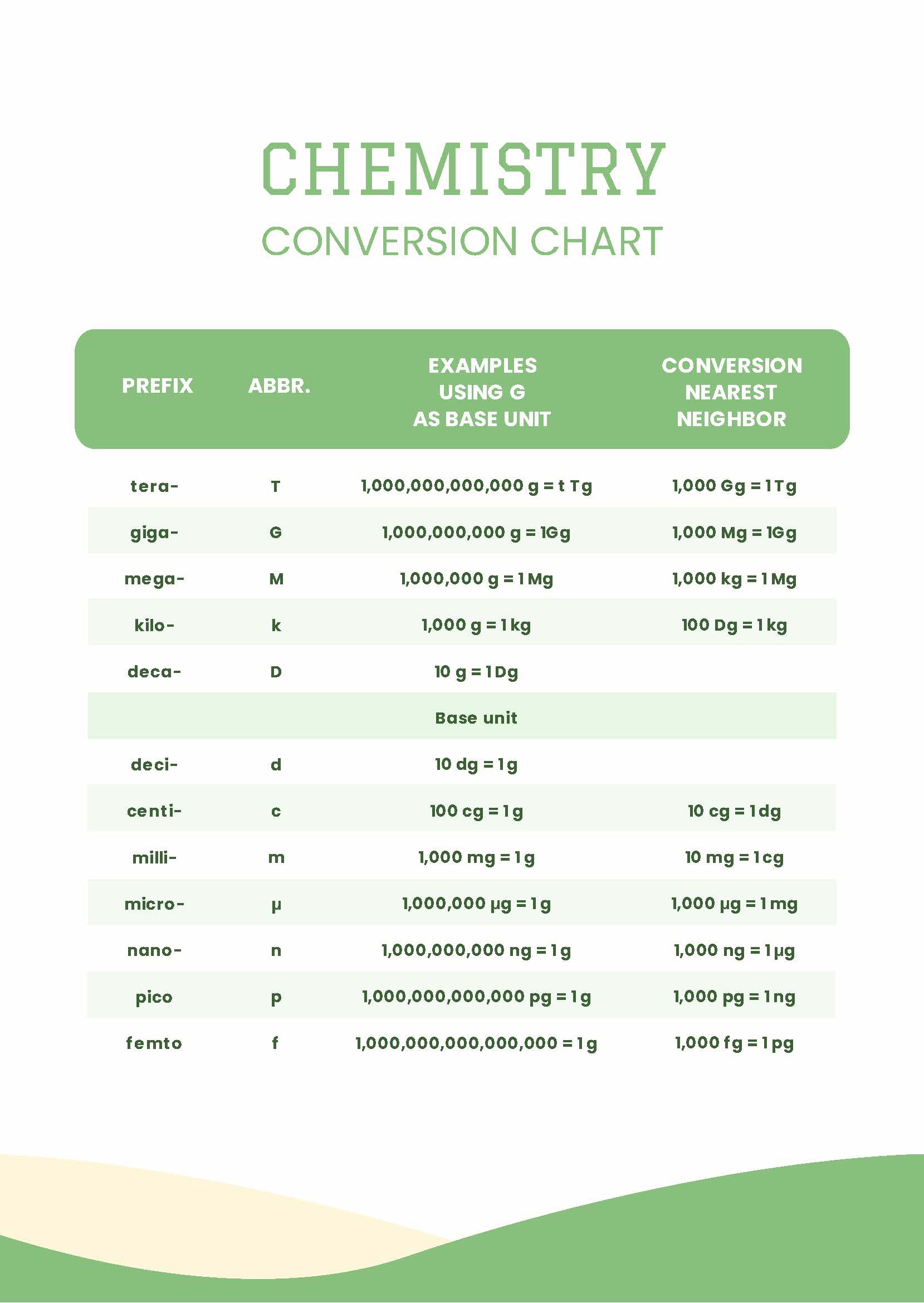
Cheat Sheet Chemistry Conversion Chart
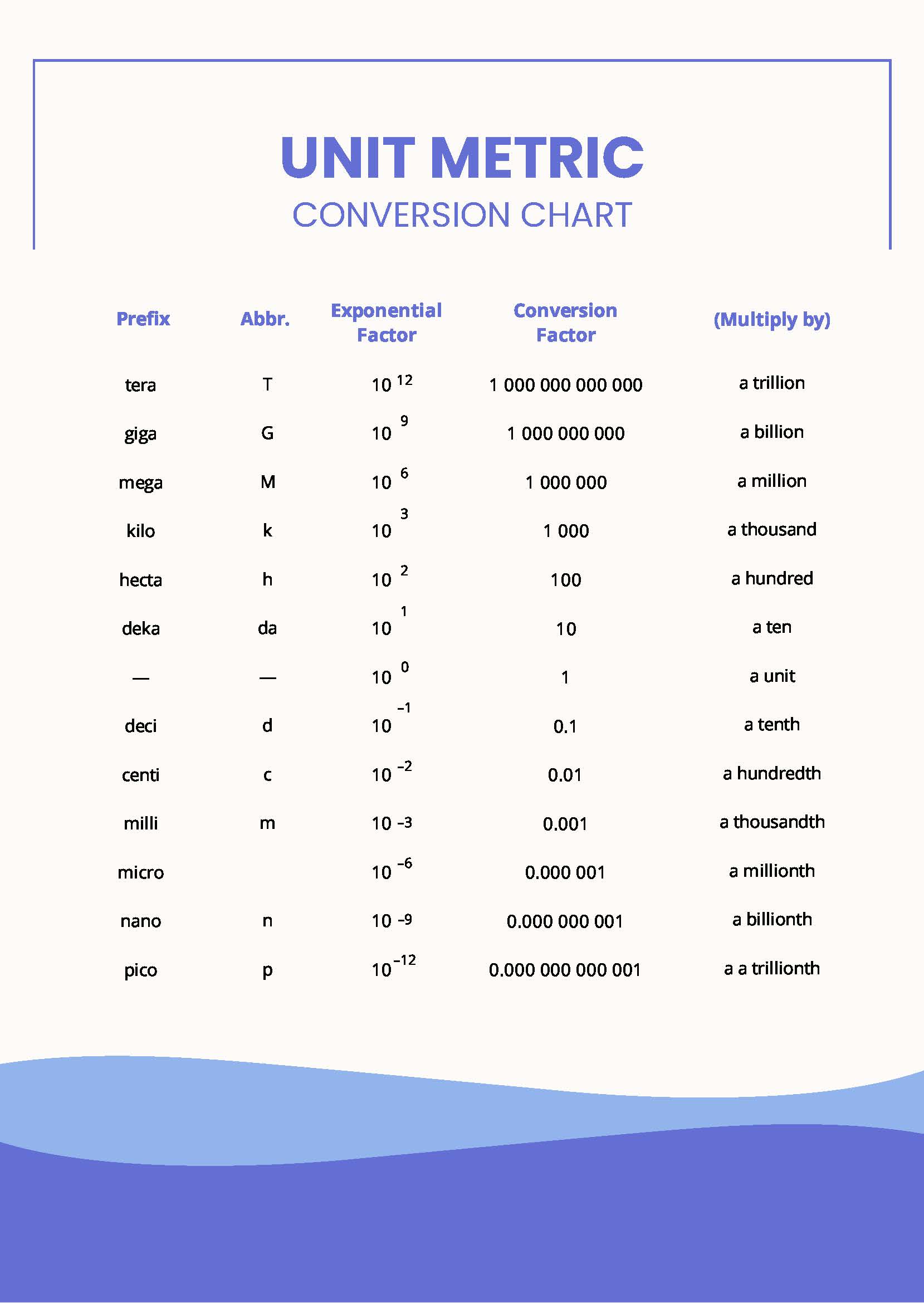
Metric Unit Conversion Chart Chemistry in Illustrator, PDF Download
[ (% × D) / Mw] × 10 = Molarity.
Web A Ratio Of Two Equivalent Quantities Expressed With Different Measurement Units Can Be Used As A Unit Conversion Factor.
Web The Following Equation Is Used For Calculating Acid And Base Molarity Where The Concentration Is Given In Wt %:
Web Unit Converters (Aka Unit Calculators) Are Tools That Allow To Convert Between Different Units Of Measurement For The Same Quantity.
Related Post: