
Friction Loss Fire Hose Chart
Friction Loss Fire Hose Chart - From fire hose to foam equipment, no other manufacturer offers a more complete solution. Web just what you need to calculate the most precise friction loss for a wide range of key hose products. Web enter the hose diameter, the gallons per minute (gpm), and the length, into the friction loss calculator Web friction loss per 100 feet of hose line. Web the friction loss sheet allows you to input gpm, pump discharge pressure, desired nozzle pressure, and elevation change and it will calculate the length of hose using both standard c values. Losses in rough walled, rubber hose may be 50% higher than values given above. Web enhance firefighting efficiency with the friction loss calculator, offering precision tools for hose performance optimization. Web all fire hose has friction loss. Friction loss is determined by the gpm flowing, the size of the hose and the length of. Please click on the table above to. Choose your hose and size below, enter the flow rate, as well as the hose length to display friction loss data. This number affects the pump discharge pressure needed to achieve your desired flow rate. The charts were developed by applying friction loss formulas or by testing the department’s. Numbers in blue for nozzle at standard 100 psi setting numbers in red for nozzle at low pressure setting Pressure loss per 100 feet (psi) From fire hose to foam equipment, no other manufacturer offers a more complete solution. Web the friction loss formula allows you to calculate the friction loss you experience from the pump to the nozzle. Web you can access fire hose friction loss charts or cheat sheets⁵ for the most common hose sizes. Losses in rough walled, rubber hose may be 50% higher than values given above. Web friction loss per 100 feet of hose line. Web most fire departments calculate the friction loss for the hoses and nozzles they carry and write them on what is called a “pump chart.” most charts list the nozzles on the apparatus,. Web study has been to develop baseline friction loss coefficients for the types of fire hose commonly used by today’s fire service, and identify any additional performance. Web enhance firefighting efficiency with the friction loss calculator, offering precision tools for hose performance optimization. Web (2) friction loss may vary with brand and condition of hose. Web all fire hose has friction loss. Web enter the hose diameter, the gallons per minute (gpm), and the length, into the friction loss calculator Web friction loss per 100 feet of. Friction loss increases 4 times for each doubling of water flow. Web (2) friction loss may vary with brand and condition of hose. Web enter the hose diameter, the gallons per minute (gpm), and the length, into the friction loss calculator Web loss in fire hose. Web friction loss per 100 feet of hose line. Choose your hose and size below, enter the flow rate, as well as the hose length to display friction loss data. Web you can access fire hose friction loss charts or cheat sheets⁵ for the most common hose sizes. Friction loss is determined by the gpm flowing, the size of the hose and the length of. Web friction loss per. Friction loss is nearly independent of pressure. Web the friction loss sheet allows you to input gpm, pump discharge pressure, desired nozzle pressure, and elevation change and it will calculate the length of hose using both standard c values. Web friction loss per 100 feet of hose line. Web study has been to develop baseline friction loss coefficients for the. Numbers in blue for nozzle at standard 100 psi setting numbers in red for nozzle at low pressure setting Friction loss increases 4 times for each doubling of water flow. Friction loss is determined by the gpm flowing, the size of the hose and the length of. Web all fire hose has friction loss. Web (2) friction loss may vary. Friction loss will vary based on hose manufacturer. Web the friction loss sheet allows you to input gpm, pump discharge pressure, desired nozzle pressure, and elevation change and it will calculate the length of hose using both standard c values. Web (2) friction loss may vary with brand and condition of hose. There is no set friction loss for any. The charts were developed by applying friction loss formulas or by testing the department’s. Friction loss will vary based on hose manufacturer. Web enter the hose diameter, the gallons per minute (gpm), and the length, into the friction loss calculator Web all fire hose has friction loss. Friction loss is nearly independent of pressure. Web enter the hose diameter, the gallons per minute (gpm), and the length, into the friction loss calculator and then press the submit button. This number affects the pump discharge pressure needed to achieve your desired flow rate. Please click on the table above to. Web friction loss iii fire hose loss in psi per 100 feet of hose size. Losses in rough walled, rubber hose may be 50% higher than values given above. Web friction losses on reeled hose average about 21 percent more than for straight hose lays. Web study has been to develop baseline friction loss coefficients for the types of fire hose commonly used by today’s fire service, and identify any additional performance characteristics that should. These calculations are meant to be a guideline. From fire hose to foam equipment, no other manufacturer offers a more complete solution. Web the friction loss sheet allows you to input gpm, pump discharge pressure, desired nozzle pressure, and elevation change and it will calculate the length of hose using both standard c values. Numbers in blue for nozzle at standard 100 psi setting numbers in red for nozzle at low pressure setting Friction loss increases 4 times for each doubling of water flow. Friction loss is determined by the gpm flowing, the size of the hose and the length of. There is no set friction loss for any one size of hose. Web enter the hose diameter, the gallons per minute (gpm), and the length, into the friction loss calculator and then press the submit button. Choose your hose and size below, enter the flow rate, as well as the hose length to display friction loss data. Please click on the table above to. Web enter the hose diameter, the gallons per minute (gpm), and the length, into the friction loss calculator Web the friction loss formula allows you to calculate the friction loss you experience from the pump to the nozzle. Friction loss will vary based on hose manufacturer. Web (2) friction loss may vary with brand and condition of hose. Web study has been to develop baseline friction loss coefficients for the types of fire hose commonly used by today’s fire service, and identify any additional performance characteristics that should be considered for friction loss calculations. Web all fire hose has friction loss.
Fire Hose Friction Loss Cheat Sheet
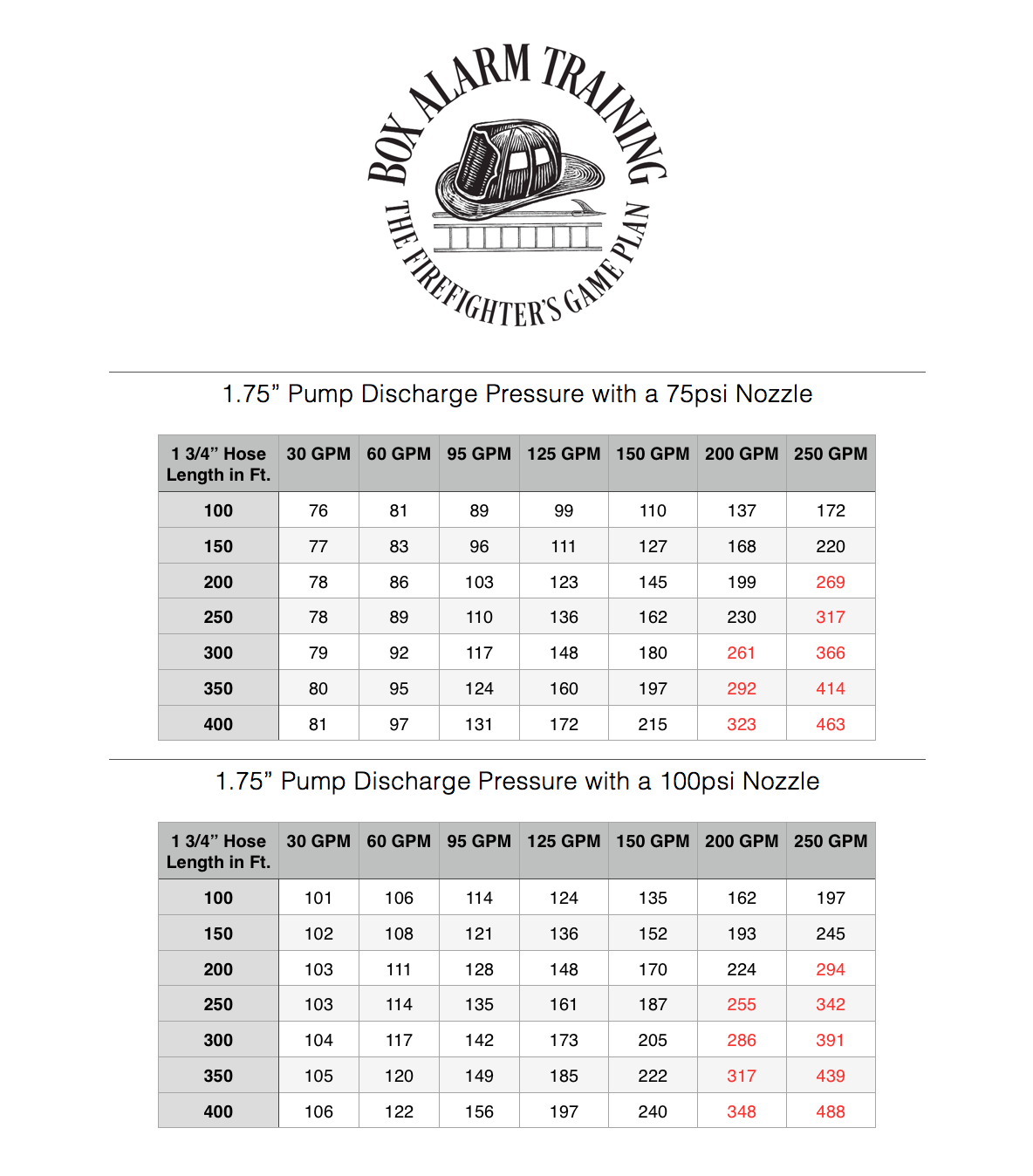
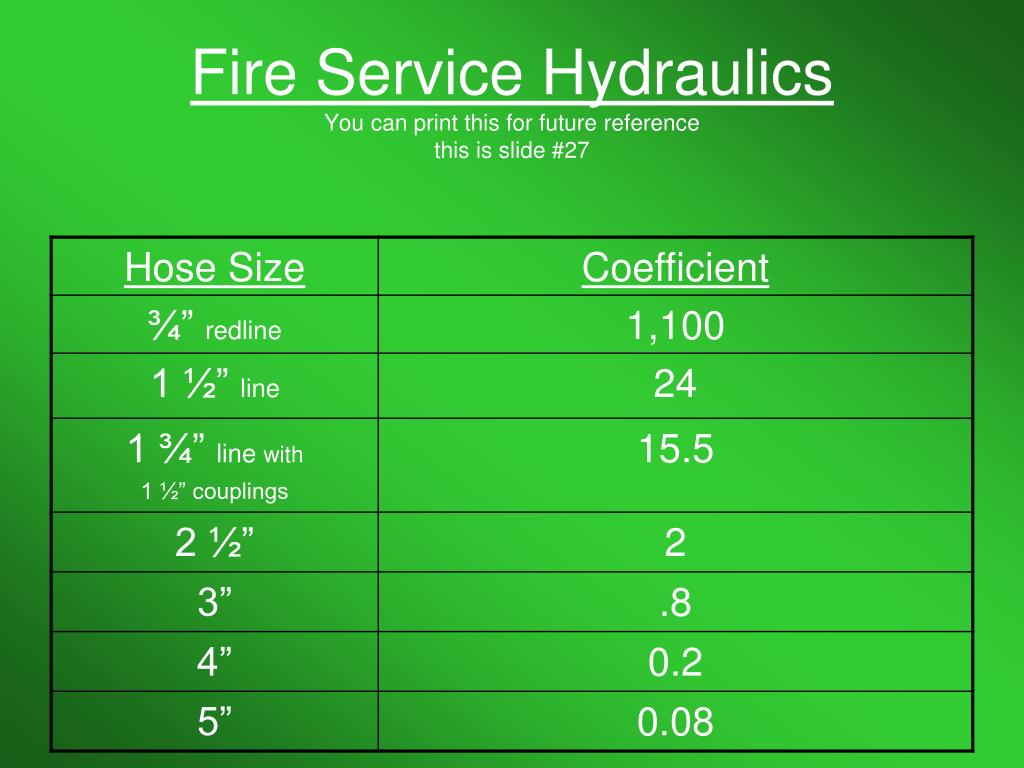
Fire Hose Friction Loss Coefficient Chart vrogue.co
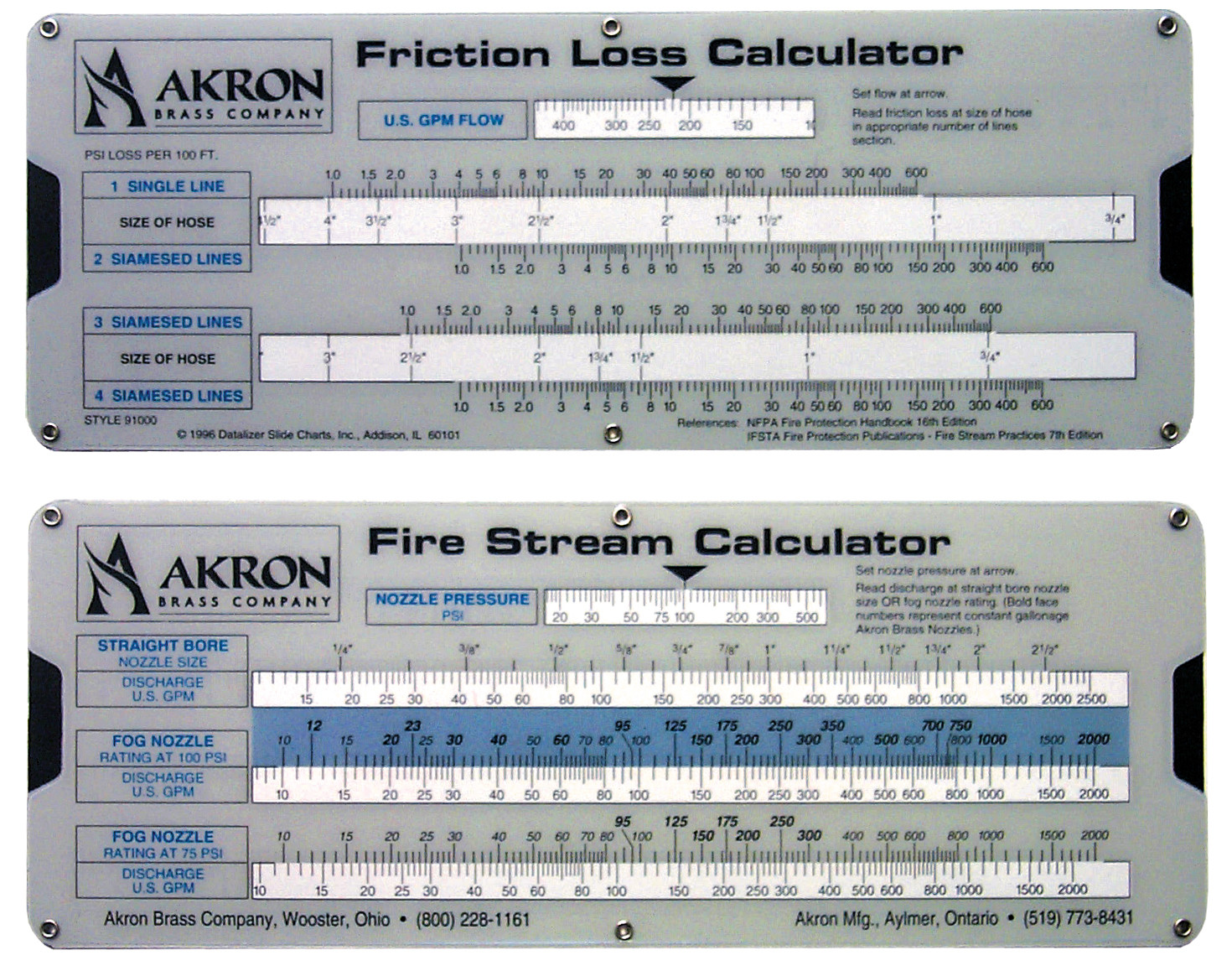
Fire Hose Friction Loss Coefficient Chart
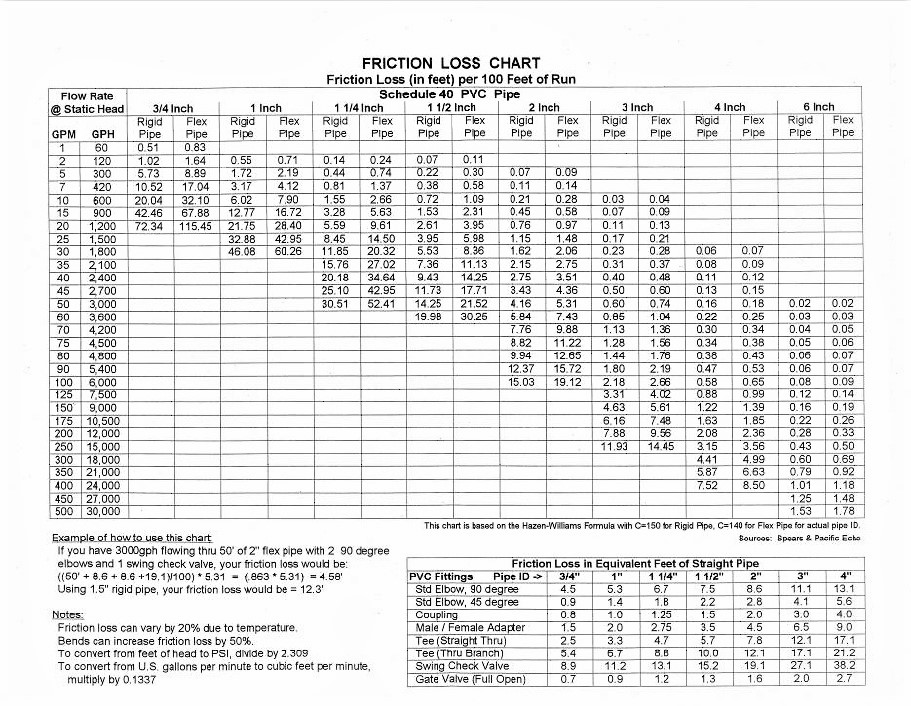
Fire Pump Friction Loss Cheat Sheet Chart
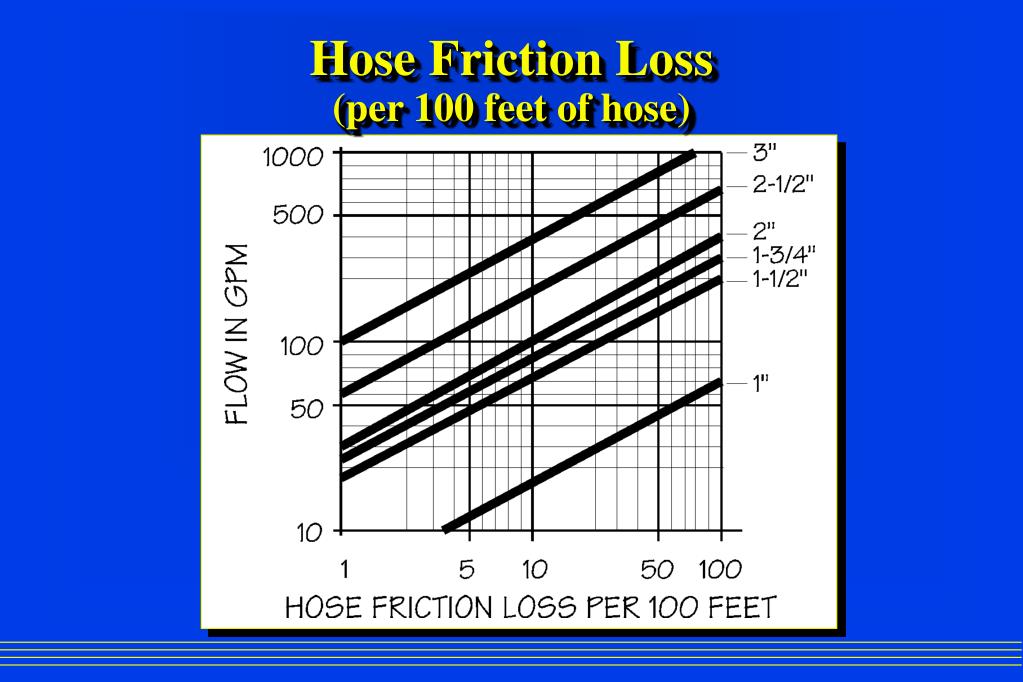
Fire Hose Friction Loss Chart

Fire Hose Friction Loss Cheat Sheet Printable Templates Free

fire hose friction loss coefficient chart Focus
Fire Hose Friction Loss Chart
Fire Hose Friction Loss Coefficient Chart

1.75 inch Friction Loss Calculator Fire training, Firefighter
Web Friction Loss Per 100 Feet Of Hose Line.
Web You Can Access Fire Hose Friction Loss Charts Or Cheat Sheets⁵ For The Most Common Hose Sizes.
Web The First Method For Determining Friction Loss Is To Use A Pump Chart, As Do Most Fire Departments.
Losses In Rough Walled, Rubber Hose May Be 50% Higher Than Values Given Above.
Related Post:
