
Generalized Compressibility Chart
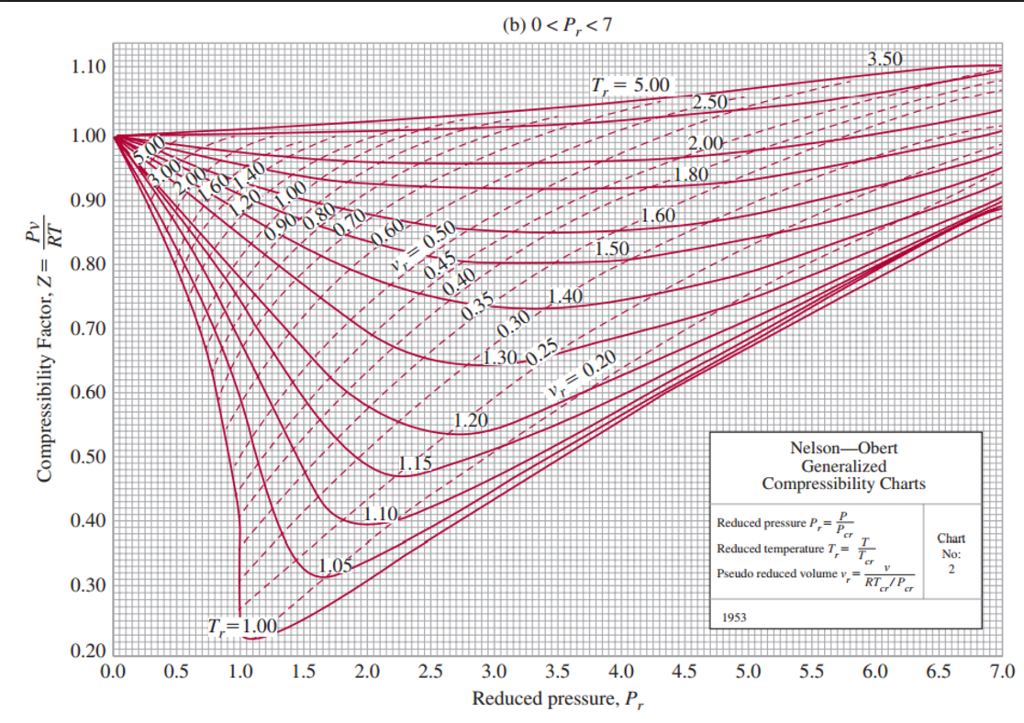
Generalized Compressibility Chart - Values for p c and t c for various substances can be found in table c.12. Web the compressibility factor equation can be written as: 2.1 and 2.3) is modified for use for real gases by introducing the generalized compressibility factor, which is represented. 13.12) is modified for use for real gases by introducing the “generalized compressibility factor” [1, 2, 6], which is represented by the symbol “z.” the compressibility factor can be included in eqs. Web the compressibility factor is given by: At very low pressure (pr << 1), gases behave as an ideal gas regardless of temperature. Is the same for all gases. Web properties of common gases. The ideal gas equation (eqs. Vapor pressure curves for common pure gases. Z = p × v / n × r × t, where z is the compressibility factor, for pressure p, volume v, gas constant r, number of moles n, and temperature t. (b) the pressure in mpa at the final state. This chart brings the following information: Compare the results of parts (a) and (b) with values obtained from the thermodynamic table or software11. Values for p c and t c for various substances can be found in table c.12. Reduced pressure is the ratio of the actual pressure. Web the compressibility factor equation can be written as: A test for whether a gas behaves ideally can be obtained by comparing the actual pressure and temperature to the critical pressure and temperature. Web the resulting z = z (p r, t r, v′ r) plot is now called the generalized compressibility chart and is shown in figures 11.5, 11.6, and 11.7. At very low pressure (pr << 1), gases behave as an ideal gas regardless of temperature. These have been extended [see, e.g.,. Milton beychok) we can rewrite the universal expression for compressibility \(z\) using reduced variables and plot measured values of \(z\) versus the reduced pressure, \(p_r\) (see figure 16.4.1 ). At very low pressure (pr << 1), gases behave as an ideal gas regardless of temperature. Bloch copyright © 2006 john wiley & sons, inc.. Z = p × v / n × r × t, where z is the compressibility factor, for pressure p, volume v, gas constant r, number of moles n, and temperature t. Web the compressibility factor chart plots the compressibility factor , equal to , where is the volume per mole, versus the reduced pressure for several values of the. It is valid for many substances, especially those that have simple molecular structures. Milton beychok) we can rewrite the universal expression for compressibility \(z\) using reduced variables and plot measured values of \(z\) versus the reduced pressure, \(p_r\) (see figure 16.4.1 ). When p, pc, t, tc, v , and r are used in consistent units, z, pr, and tr. Z = p × v / n × r × t, where z is the compressibility factor, for pressure p, volume v, gas constant r, number of moles n, and temperature t. Web properties of common gases. It is valid for many substances, especially those that have simple molecular structures. Web generalized compressibility chart and the compressibility factor, z. When. At high temperatures (tr > 2), ideal gas behavior can be assumed with good accuracy. (b) the pressure in mpa at the final state. These have been extended [see, e.g.,. Bloch copyright © 2006 john wiley & sons, inc. At very low pressure (pr << 1), gases behave as an ideal gas regardless of temperature. If we only know the temperature and pressure, we can still calculate it using a compressibility chart. On a generalized compressibility chart, the compressibility z z is plotted as a function f = f(pr,tr) f = f ( p r, t r) of the reduced pressure and temperature. Web the compressibility factor is given by: It is valid for many. Milton beychok) we can rewrite the universal expression for compressibility \(z\) using reduced variables and plot measured values of \(z\) versus the reduced pressure, \(p_r\) (see figure 16.4.1 ). 2.1 and 2.3) is modified for use for real gases by introducing the generalized compressibility factor, which is represented. Web figure 1 shows the essential features of a generalized compressibility factor. Compare the results of parts (a) and (b) with values obtained from the thermodynamic table or software11. It is valid for many substances, especially those that have simple molecular structures. Milton beychok) we can rewrite the universal expression for compressibility \(z\) using reduced variables and plot measured values of \(z\) versus the reduced pressure, \(p_r\) (see figure 16.4.1 ). Web. Vapor pressure curves for common pure gases. Web the compressibility factor equation can be written as: Web generalized compressibility chart and the compressibility factor, z. Then, a compressibility factor (z) can be used to quantify Web 13.5.1 generalized compressibility chart. Web essentially it corrects for the deviation of a real gas from an ideal gas. Z = pv¯¯¯¯ rt z = p v ¯ r t. Compare the results of parts (a) and (b) with values obtained from the thermodynamic table or software11. 13.12) is modified for use for real gases by introducing the “generalized compressibility factor” [1, 2, 6],. Reduced pressure is the ratio of the actual pressure. Web the resulting z = z (p r, t r, v′ r) plot is now called the generalized compressibility chart and is shown in figures 11.5, 11.6, and 11.7. Web the generalized compressibility chart can be viewed as a graphical representation of the gas behaviour over a wide range of pressures and temperatures. Is the same for all gases. Z = p × v / n × r × t, where z is the compressibility factor, for pressure p, volume v, gas constant r, number of moles n, and temperature t. 2.1 and 2.3) is modified for use for real gases by introducing the generalized compressibility factor, which is represented. The reduced pressure and temperature are defined by and , respectively, where is the critical pressure and is the critical temperature. The ideal gas equation (eqs. Web figure 1 shows the essential features of a generalized compressibility factor chart. Web essentially it corrects for the deviation of a real gas from an ideal gas. 13.12 and 13.15 resulting in the following equations for real gases. This chart brings the following information: These have been extended [see, e.g.,. Web the compressibility factor chart plots the compressibility factor , equal to , where is the volume per mole, versus the reduced pressure for several values of the reduced temperature. Web generalized compressibility chart and the compressibility factor, z. Web using the compressibility chart, determine (a) the specific volume of the water vapor in m3/kg at the initial state.
Introduction to the Generalized Compressibility Chart Engineering
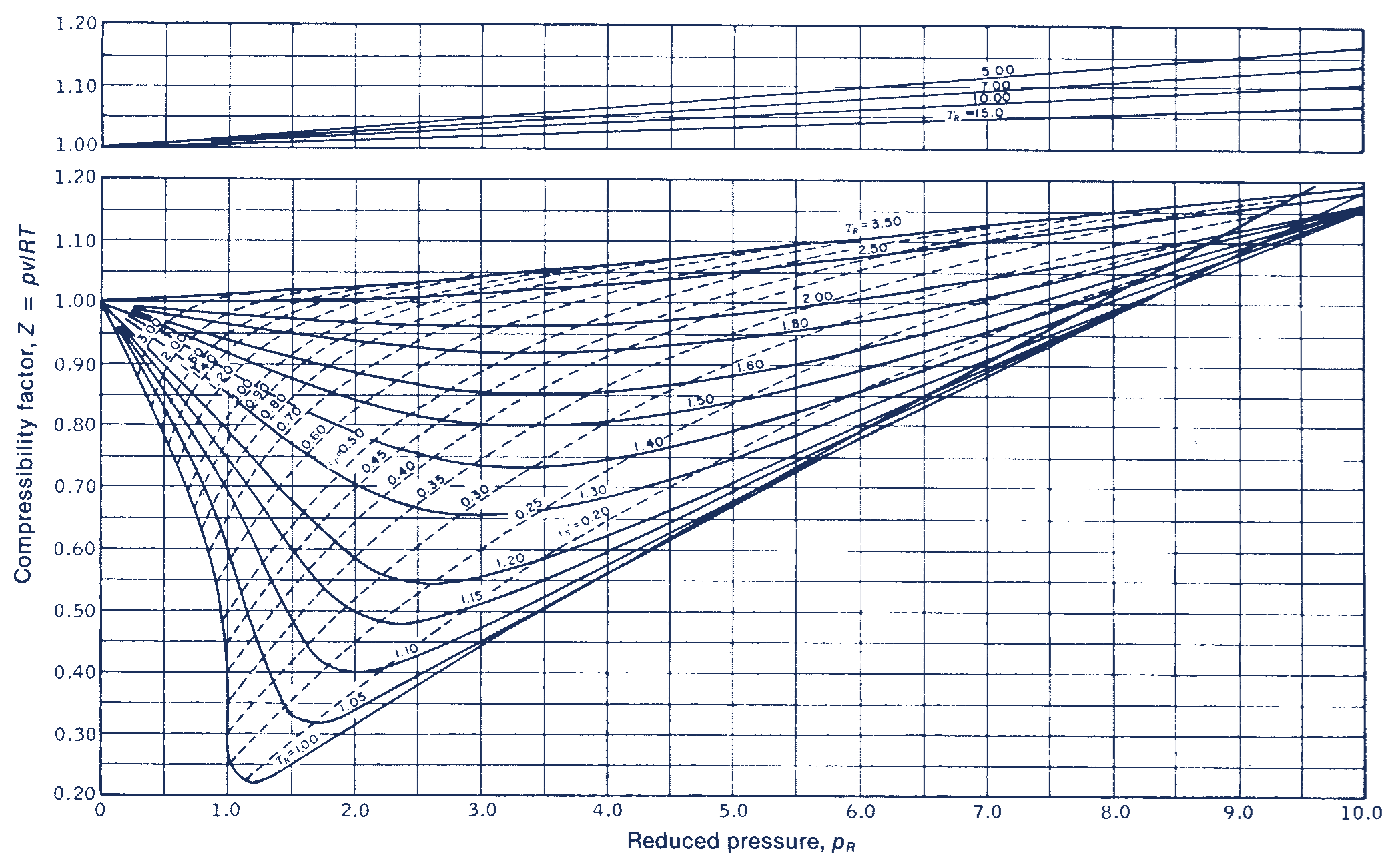
Generalized Compressibility Chart

Generalized compressibility charts Big Chemical Encyclopedia
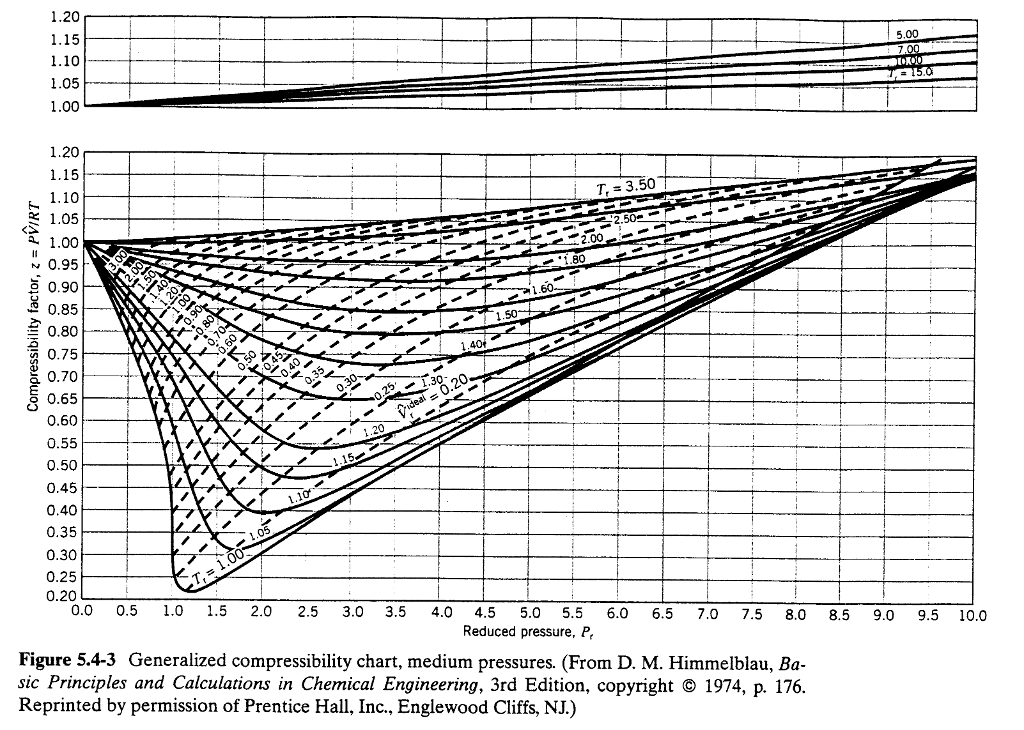
Solved Use the generalised compressibility chart to estimate
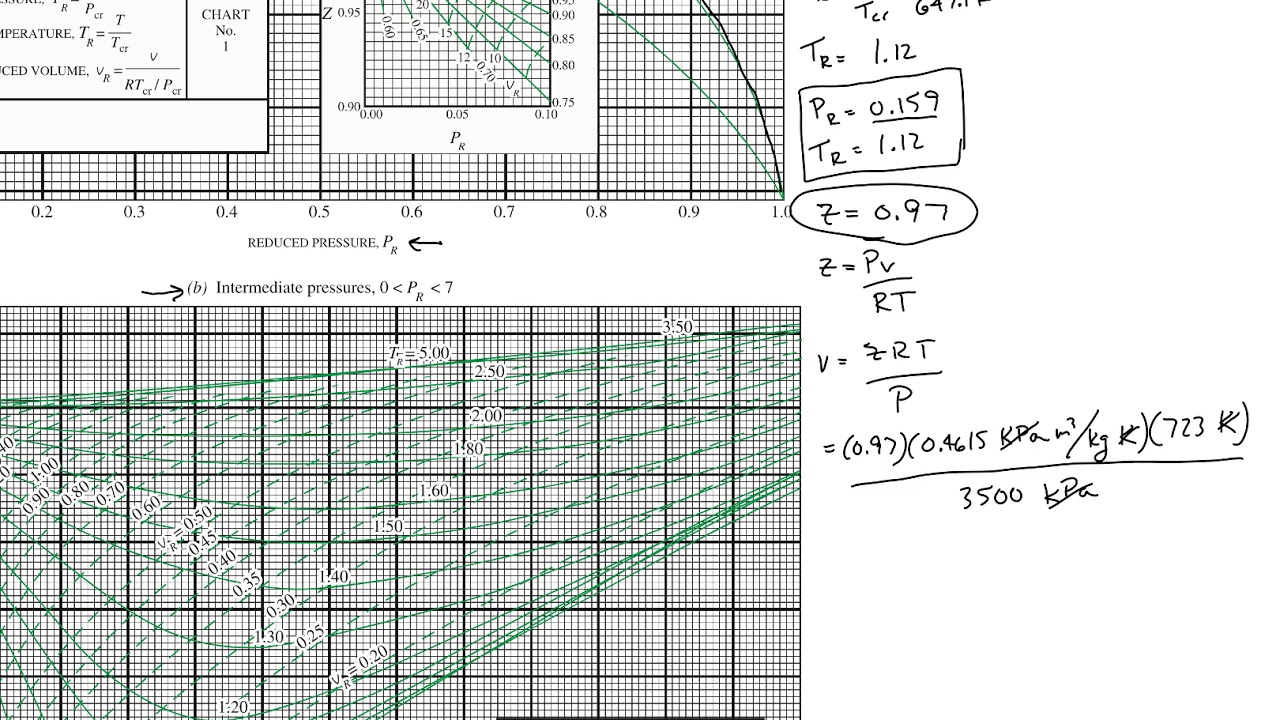
Thermodynamics Generalized Compressibility Chart YouTube

Generalized Compressibility Chart
Generalized Compressibility Chart PDF Thermodynamics

Generalized Compressibility Chart
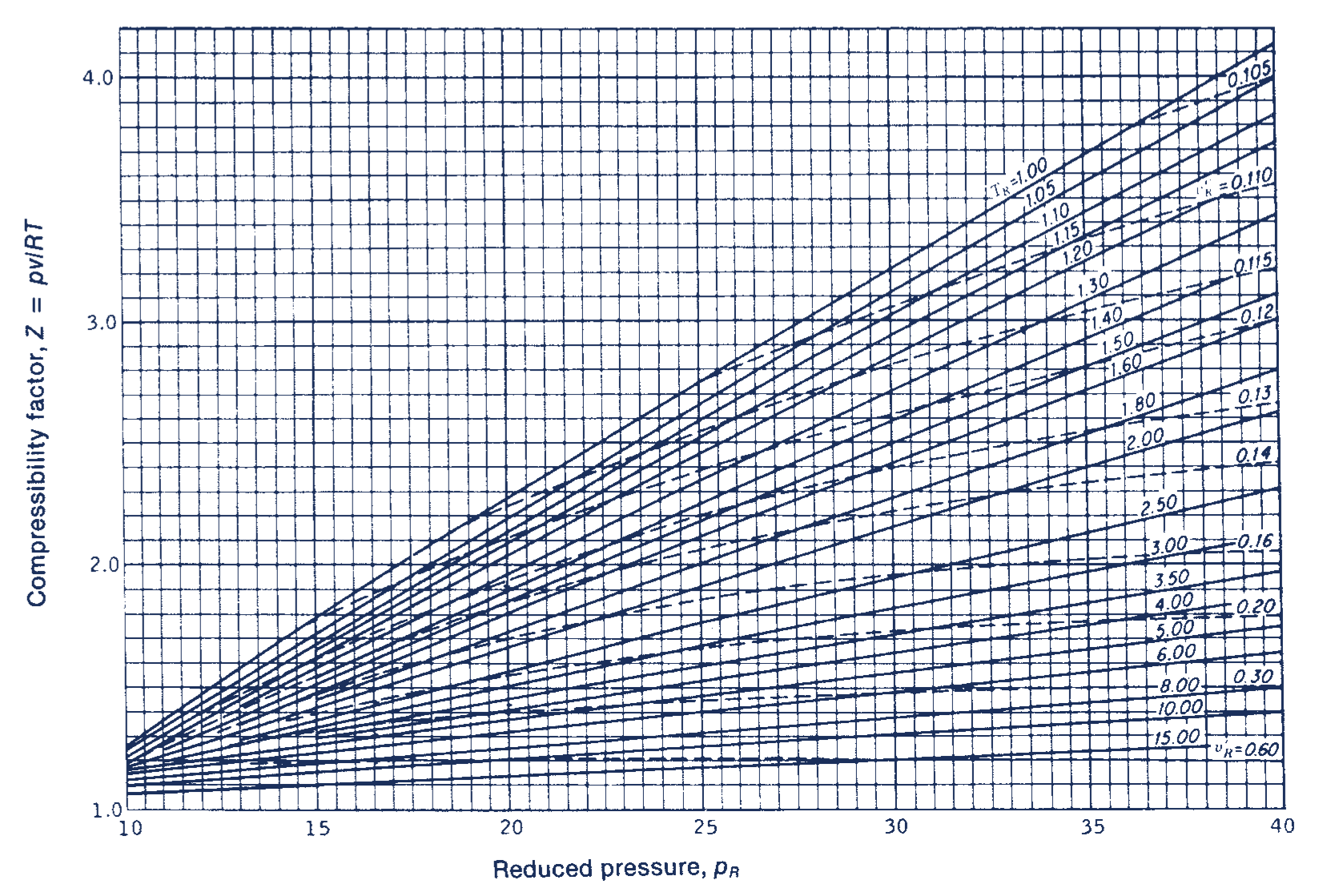
Generalized Compressibility Chart
Generalized Compressibility Chart Calculator A Visual Reference of
At High Temperatures (Tr > 2), Ideal Gas Behavior Can Be Assumed With Good Accuracy.
At Very Low Pressure (Pr << 1), Gases Behave As An Ideal Gas Regardless Of Temperature.
Web The Generalized Compressibility Chart Can Be Viewed As A Graphical Representation Of The Gas Behaviour Over A Wide Range Of Pressures And Temperatures.
For Air At 200 K, 132 Bar, Tr = 200 K/133 K = 1.5, Pr = 132 Bar/37.7 Bar =.
Related Post:
