
Grease Compatibility Chart
Grease Compatibility Chart - Web what does the compatibility test tell me for converting grease on my equipment? Web industrial grease compatibility chart selector | mobil industrial lubricants. Compatible, incompatible, and borderline compatible. Additional testing might be warranted. Web compatibility testing includes heating and holding grease for a specified time at assumed operating temperature for mixtures of 10:90, 50:50 and 90:10. This chart is for reference only; Amsoil recommends that when changing greases, the equipment be cleaned of the old grease when possible or flushed with a liberal amount of the intended new grease while the mechanism is in operation. Web the chart below illustrates the compatibility between most grease types with three categories: Web proper care must be taken to ensure compatibility when changing from one grease system to another, including cleaning if possible, compatibility verification (including base oil), monitoring and assessing, purging and flushing. Changing formulations and complexity in application have rendered grease compatibility charts unreliable. Compatible, incompatible, and borderline compatible. Web lubricating grease compatibility is crucial in industrial and automotive applications because mixing incompatible greases can lead to numerous problems affecting equipment performance, reliability, and lifespan. Web use this chart to find out if two lubricating greases are compatible by checking their thickeners. When a given lubricating grease is intended to be replaced by another one in a given application, there is always a question about whether or not they are both compatible. This paper describes the most common examples of incompatible mixing and how to determine if two greases are compatible. Web grease compatibility chart relative compatibility rating b = borderline c = compatible i = incompatible note: And what is actually evaluated? Web research shows grease compatibility charts to be contradictory and dated. Web greases are available with many diferent thickener types, base oil types, and base oil viscosities. The generic chart in table 1 is common within industry and reflects the compatibility result trends related solely to structural stability of the grease mixture. However, grease technology has changed significantly over the years, and there are many examples of performance that contradict several widely used compatibility charts. It should be used with due diligence considering its limitations: Whether two greases are compatible will depend on the thickener type and base fluid as well as the resulting grease properties after the two grease types have. Web understanding industry standard lab investigations and what their results can (and cannot) tell you about the compatibility of greases is critical. Web lubricating grease compatibility is crucial in industrial and automotive applications because mixing incompatible greases can lead to numerous problems affecting equipment performance, reliability, and lifespan. Compatible, incompatible, and borderline compatible. Web use this chart to find out. Specific properties of greases can dictate compatibility. Web compatibility testing includes heating and holding grease for a specified time at assumed operating temperature for mixtures of 10:90, 50:50 and 90:10. Web grease compatibility chart relative compatibility rating b = borderline c = compatible i = incompatible note: Web grease compatibility charts have been developed and circulated since the 1980s without. Changing formulations and complexity in application have rendered grease compatibility charts unreliable. Web the chart below illustrates the compatibility between most grease types with three categories: This paper describes the most common examples of incompatible mixing and how to determine if two greases are compatible. Additional testing might be warranted. Web grease compatibility charts have been developed and circulated since. Whether two greases are compatible will depend on the thickener type and base fluid as well as the resulting grease properties after the two grease types have been sufficiently mixed. Web this chart is meant to serve as a general guideline for grease compatibility. Whether two different greases are compatible will depend mostly on the compatibility of the thickener used. Additional testing might be warranted. Web proper care must be taken to ensure compatibility when changing from one grease system to another, including cleaning if possible, compatibility verification (including base oil), monitoring and assessing, purging and flushing. In order to decide whether greases are compatible, they need to match in terms of thickener type, base fluid, and additive. This chart. Additional testing might be warranted. The grease is then inspected for visual abnormalities and can be tested for. Web this chart is meant to serve as a general guideline for grease compatibility. Specific properties of greases can dictate compatibility. But how is compatibility defined? Web compatibility charts for different greases. Web compatibility testing includes heating and holding grease for a specified time at assumed operating temperature for mixtures of 10:90, 50:50 and 90:10. This chart is for reference only; However, grease technology has changed significantly over the years, and there are many examples of performance that contradict several widely used compatibility charts. Though manufacturers. Web greases are available with many diferent thickener types, base oil types, and base oil viscosities. Web technological advances have made grease compatibility a much more complicated proposition with the wide and complex array of thickeners used. This article will describe the most common examples of. Additional testing might be warranted. Web this chart is meant to serve as a. It should be used with due diligence considering its limitations: Specific properties of greases can dictate compatibility. This article will describe the most common examples of. Web technological advances have made grease compatibility a much more complicated proposition with the wide and complex array of thickeners used. But how is compatibility defined? Web compatibility charts for different greases. Web grease compatibility charts have been developed and circulated since the 1980s without much alteration. Web understanding industry standard lab investigations and what their results can (and cannot) tell you about the compatibility of greases is critical. After mixing, the resulting properties should also be examined. Whether two different greases are compatible will depend mostly on the compatibility of the thickener used in the two products (although base oil compatibility can also be a consideration). Web use this chart to find out if two lubricating greases are compatible by checking their thickeners. Web this chart is meant to serve as a general guideline for grease compatibility. Web grease compatibility chart relative compatibility rating b = borderline c = compatible i = incompatible note: Web greases are available with many diferent thickener types, base oil types, and base oil viscosities. Web proper care must be taken to ensure compatibility when changing from one grease system to another, including cleaning if possible, compatibility verification (including base oil), monitoring and assessing, purging and flushing. But how is compatibility defined? Amsoil recommends that when changing greases, the equipment be cleaned of the old grease when possible or flushed with a liberal amount of the intended new grease while the mechanism is in operation. Web research shows grease compatibility charts to be contradictory and dated. Web lubricating grease compatibility is crucial in industrial and automotive applications because mixing incompatible greases can lead to numerous problems affecting equipment performance, reliability, and lifespan. Compatible, incompatible, and borderline compatible. The chart includes the main selection parameters, such as temperature, speed and load, as well as additional performance information.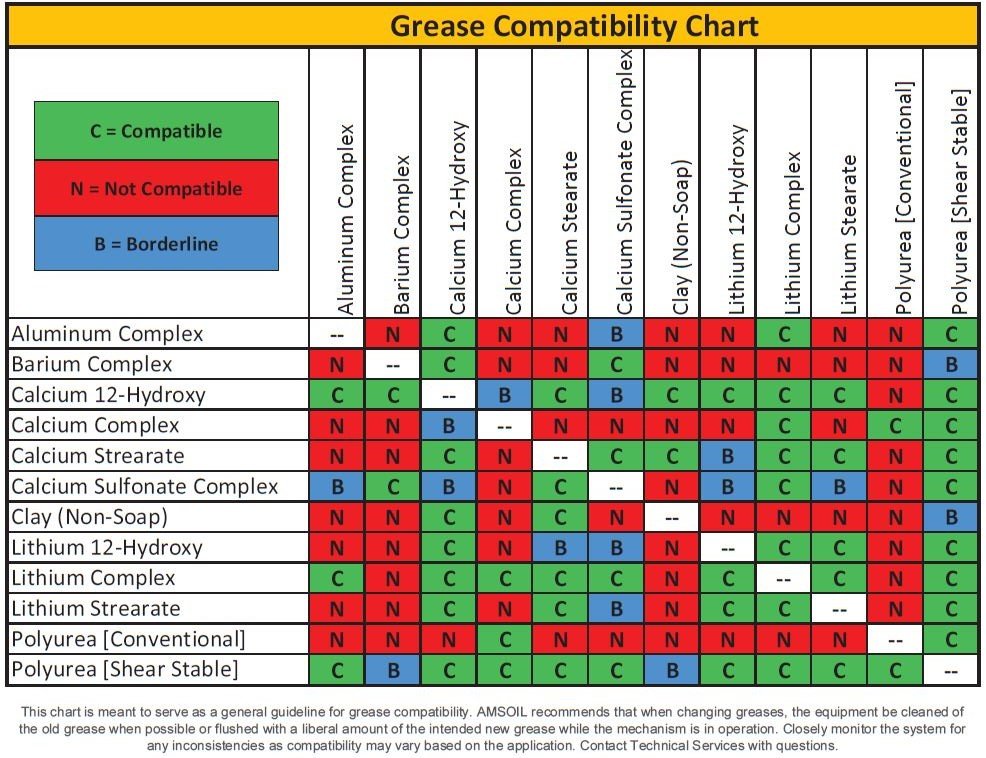
Grease lubricant that clings to the bearing surface

Grease Compatibility Chart Major Brands Oil
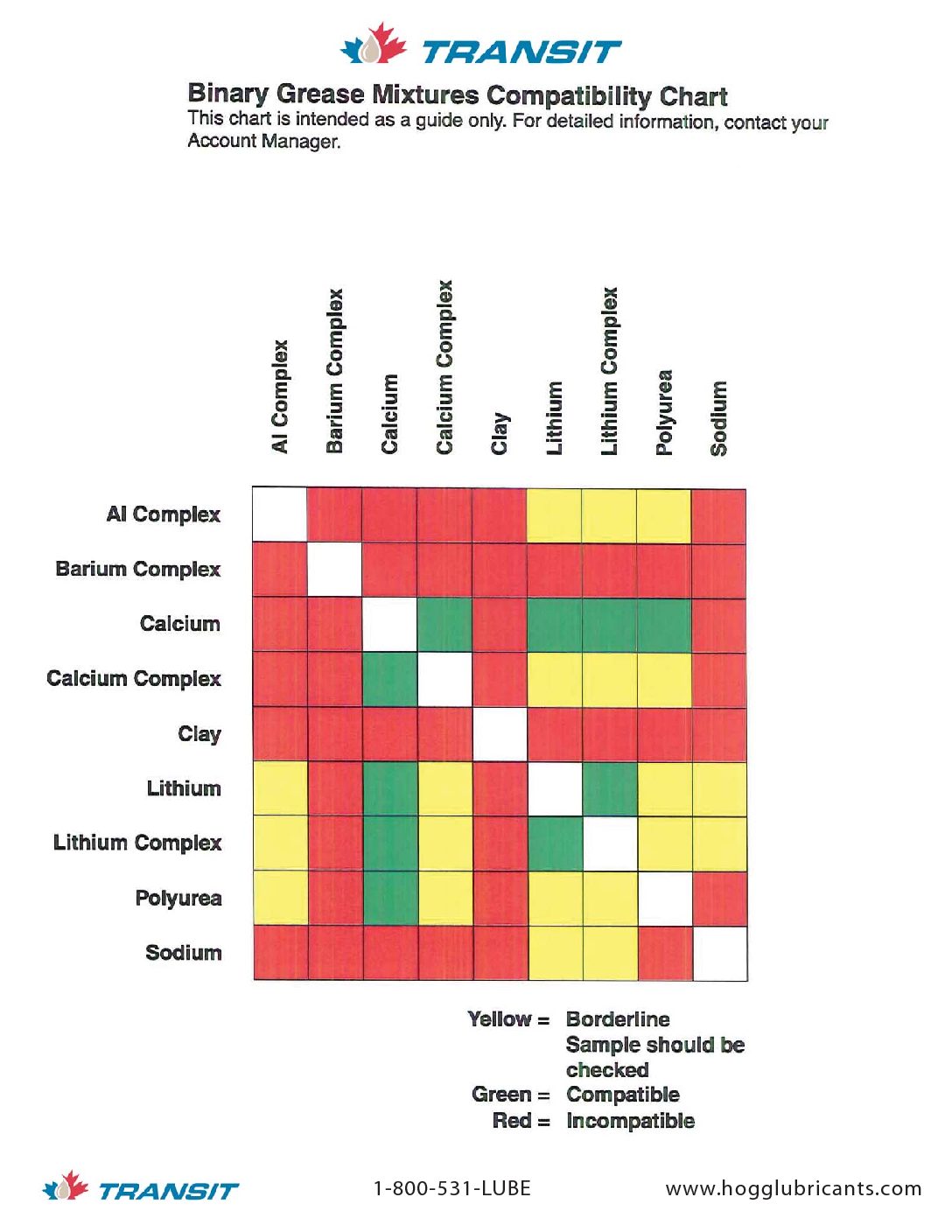
Binary Grease Compatibility Chart TRANSIT LUBRICANTS LTD.

Grease Compatibility (PDF) Fluid Life
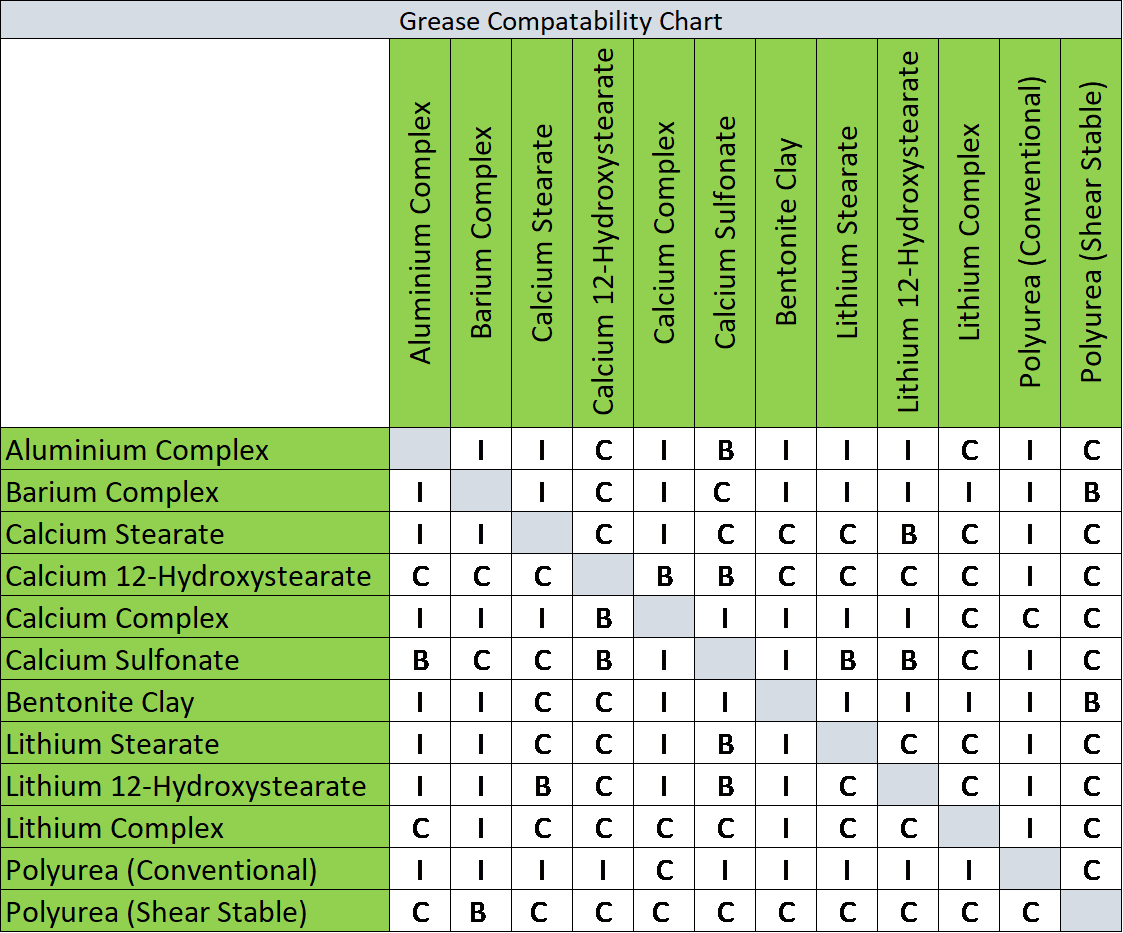
Properties Of Lubricant Presentation
Best Grease?
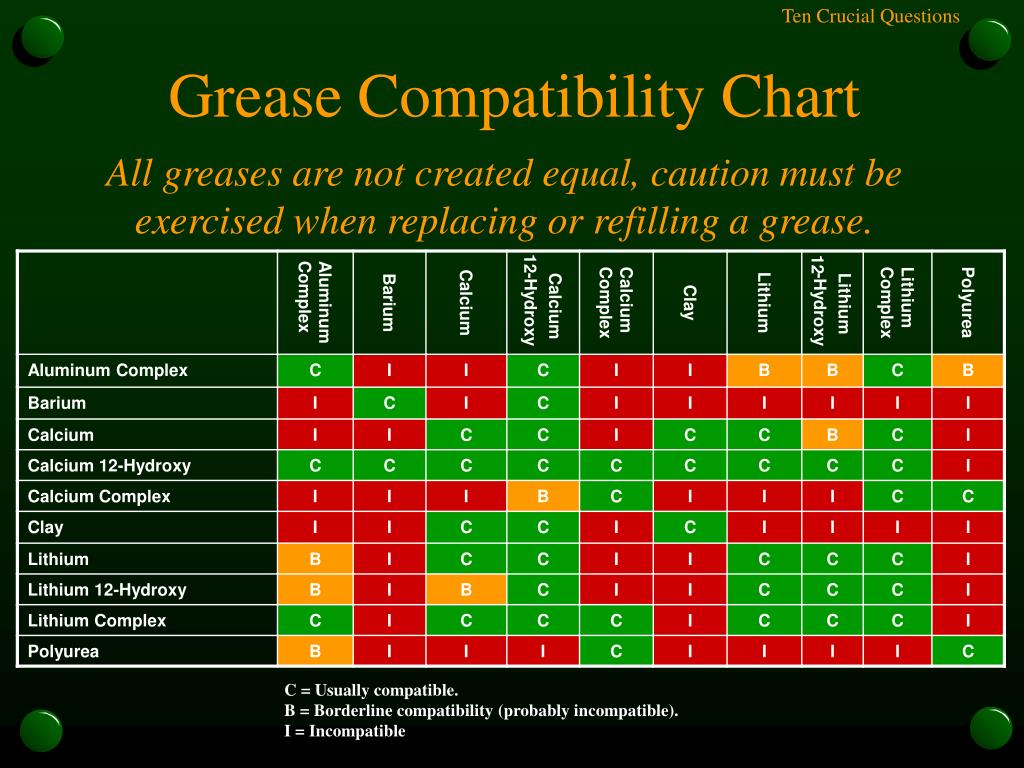
PPT SELECTING PERFORMANCE GREASE Ten Crucial Questions PowerPoint

Grease Compatibility — Muscle Products Corp
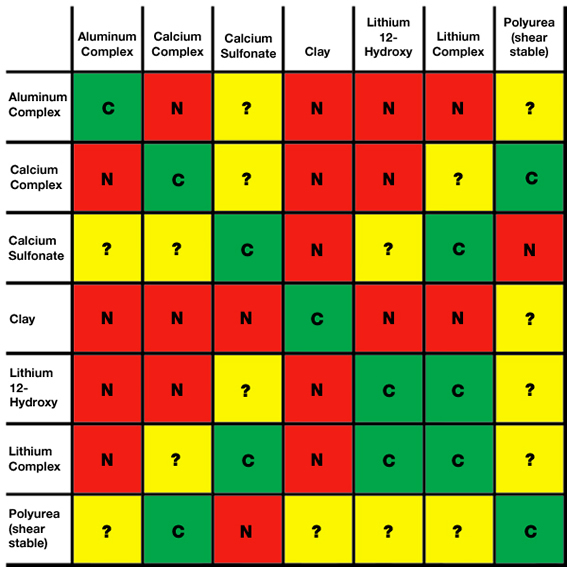
Acculube Compatibility Chart for Commercial Greases

Grease compatibility Strategic Reliability Solutions Ltd
Web The Grease Selection Chart (Pdf) Provides You With A Complete Overview Of Skf Greases.
Web What Does The Compatibility Test Tell Me For Converting Grease On My Equipment?
However, Grease Technology Has Changed Significantly Over The Years, And There Are Many Examples Of Performance That Contradict Several Widely Used Compatibility Charts.
Our Experienced Lubrication Engineers Can Recommend The Optimum Use Of All These Products.
Related Post: