
Sediment Size Chart
Sediment Size Chart - Web most sediments contain particles that have a range of sizes, so the mean or average grain size is used in description. The term may also be applied to other granular materials. Convert between millimeters and phi units. Those that are divided geometrically on a decimal basis and in a cyclic fashion; You can use them for hand specimens at home or in the classroom, or on rock outcrops. Web particle size (grain size) chart. Web clastic sedimentary particles are most commonly classified by grain size (see sediment size classification). Sand and silt may be further modified by the terms (very). Find out why grain size is important for. Grain size (or particle size) is the diameter of individual grains of sediment, or the lithified particles in clastic rocks. Web traditionally, geologists have divided sediments into four size fractions that include gravel, sand, silt, and clay, and classified these sediments based on ratios of the various. Web clastic sedimentary particles are most commonly classified by grain size (see sediment size classification). You can use them for hand specimens at home or in the classroom, or on rock outcrops. Diameter (mm) = 1/2 n. A scale of grade and. Table adapted from the wentworth scale, wentworth, c.k. Find out why grain size is important for. Sand and silt may be further modified by the terms (very). See a simplified version of the wentworth and phi scales for. The term may also be applied to other granular materials. Web sorting describes how fine to coarse grain sediments are distributed (settle), and how they will eventually lithify into sedimentary rock. This is different from the crystallite size, which refers to the size of a single crystal inside a particle or grain. Table adapted from the wentworth scale, wentworth, c.k. Several such scales have been devised for the purpose of.. Granular material can range from very small colloidal particles, through clay, silt, sand, gravel, and cobbles, to boulders. Diameter (mm) = 1/2 n. A single grain can be composed of several crystals. Those that are divided geometrically on a decimal basis and in a cyclic fashion; Web most sediments contain particles that have a range of sizes, so the mean. (from finest to coarsest) mud (silt and clay), sand, and gravel (cobbles and boulders). Web sieve analysis of sediment, log and histogram grain size plots, statistical measures of mean, mode, median, sorting, skewness. See a simplified version of the wentworth and phi scales for. Use these grain size cards in your observations of sedimentary rocks. A scale of grade and. Web sorting describes how fine to coarse grain sediments are distributed (settle), and how they will eventually lithify into sedimentary rock. Web in hydrogeology, we commonly describe sediment size in terms of phi units (φ), where the conversion to real world units is: Web however, beaches may be composed of sediments of various sizes: See a simplified version of the. Grain size (or particle size) is the diameter of individual grains of sediment, or the lithified particles in clastic rocks. Web particle size (grain size) chart. Web traditionally, geologists have divided sediments into four size fractions that include gravel, sand, silt, and clay, and classified these sediments based on ratios of the various. This is different from the crystallite size,. Those that are divided geometrically on a decimal basis and in a cyclic fashion; Several such scales have been devised for the purpose of. Web traditionally, geologists have divided sediments into four size fractions that include gravel, sand, silt, and clay, and classified these sediments based on ratios of the various. Web the wentworth scale is a scale for classifying. Learn how sediment grain size affects the formation of sedimentary rocks and how geologists measure it. This is different from the crystallite size, which refers to the size of a single crystal inside a particle or grain. Granular material can range from very small colloidal particles, through clay, silt, sand, gravel, and cobbles, to boulders. Diameter (mm) = 1/2 n.. Granular material can range from very small colloidal particles, through clay, silt, sand, gravel, and cobbles, to boulders. Web there are a number of ways that we can classify ocean sediments, and some of the most common distinctions are based on the sediment texture, the sediment. Web sieve analysis of sediment, log and histogram grain size plots, statistical measures of. Those that are divided geometrically on a decimal basis and in a cyclic fashion; Web the wentworth scale is a scale for classifying and describing sediments by grain size. (from finest to coarsest) mud (silt and clay), sand, and gravel (cobbles and boulders). Web sieve analysis of sediment, log and histogram grain size plots, statistical measures of mean, mode, median,. Particle size, also called grain size, refers to the diameter of individual grains of sediment, or the lithified particles in clastic rocks. Table adapted from the wentworth scale, wentworth, c.k. Grain size (or particle size) is the diameter of individual grains of sediment, or the lithified particles in clastic rocks. Web there are a number of ways that we can. Granular material can range from very small colloidal particles, through clay, silt, sand, gravel, and cobbles, to boulders. Learn how sediment grain size affects the formation of sedimentary rocks and how geologists measure it. Several such scales have been devised for the purpose of. This is different from the crystallite size, which refers to the size of a single crystal inside a particle or grain. Find out why grain size is important for. Those that are divided geometrically on a decimal basis and in a cyclic fashion; A scale of grade and. Web traditionally, geologists have divided sediments into four size fractions that include gravel, sand, silt, and clay, and classified these sediments based on ratios of the various. Web there are a number of ways that we can classify ocean sediments, and some of the most common distinctions are based on the sediment texture, the sediment. (from finest to coarsest) mud (silt and clay), sand, and gravel (cobbles and boulders). You can use them for hand specimens at home or in the classroom, or on rock outcrops. Convert between millimeters and phi units. Mean grain size of loose sediments is measured by size. Web clastic sedimentary particles are most commonly classified by grain size (see sediment size classification). A single grain can be composed of several crystals. Web pettijohn (1975) has pointed out three types of size classification: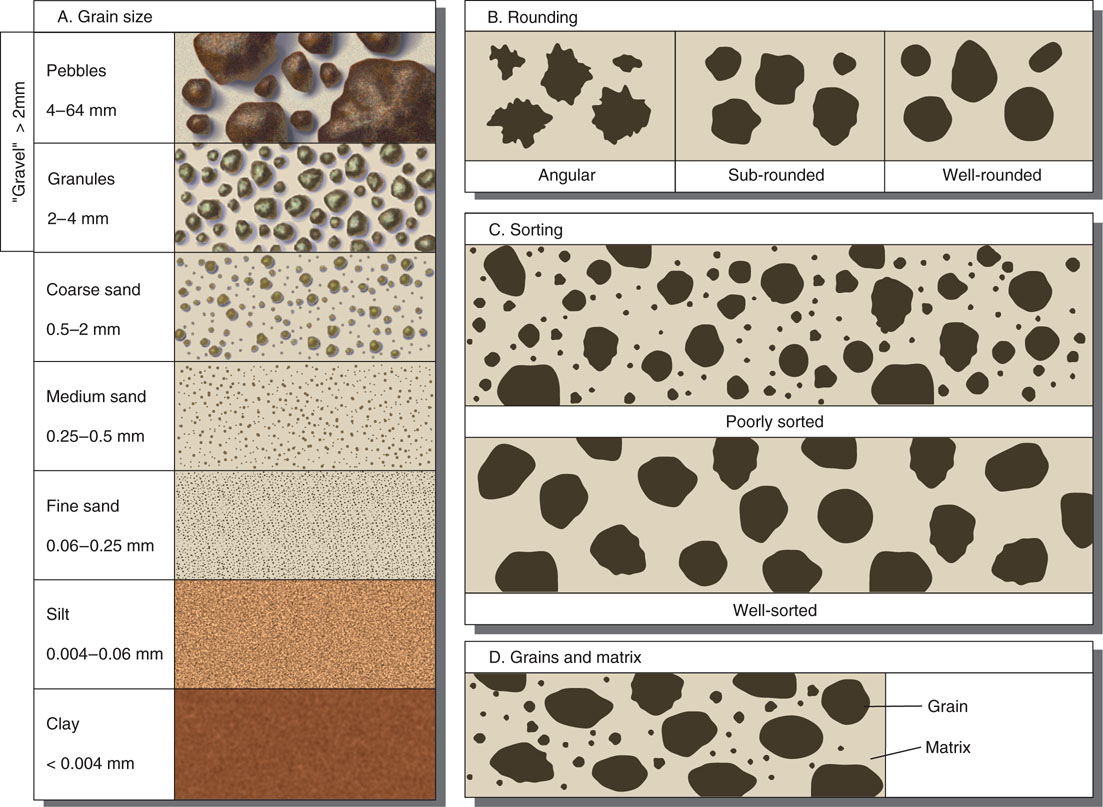
Study Reveals How Climate Influences Sediment Size Geology In

Sediment Grain Size Chart
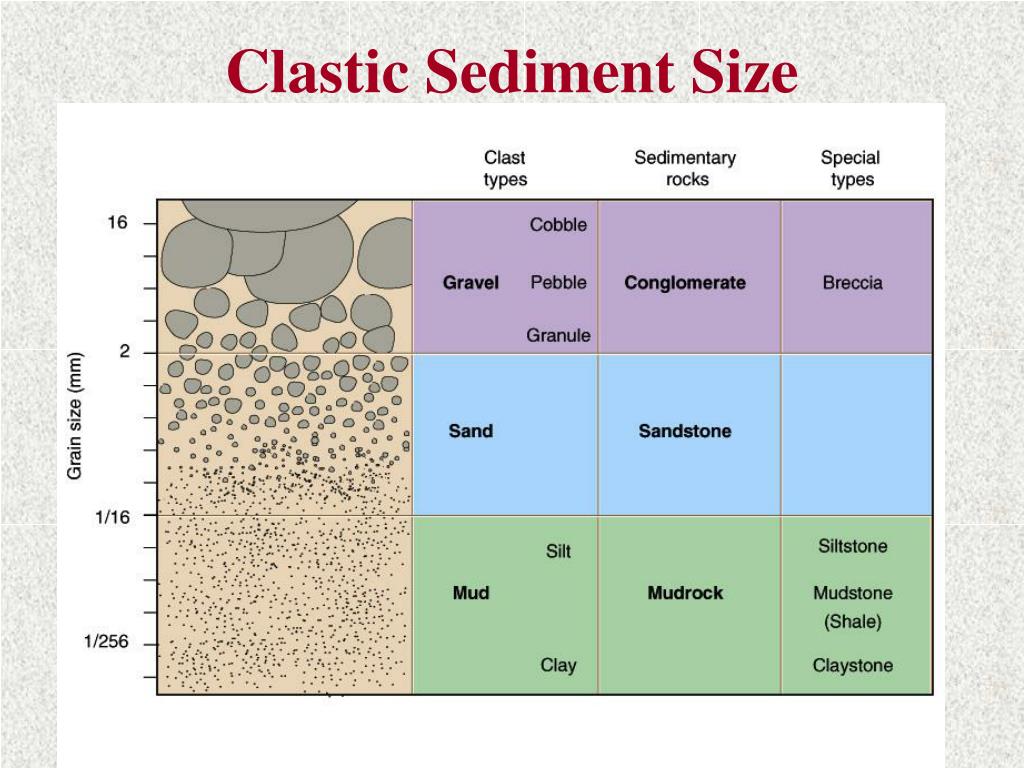
PPT Sediments and Sedimentary Rocks PowerPoint Presentation, free

Comparison of grain sizes to soils and loess sediment classification

Sediment Grain Size Chart

Sediment grainsize scale Download Table

Sediment size scales and classes Download Table

Sediment size chart. Soil mechanics, Geology, Sedimentary rocks
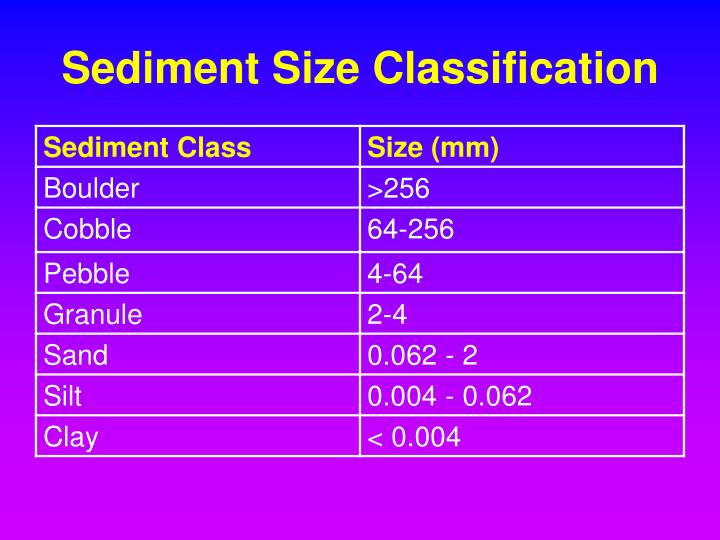
PPT Sea Floor Sediments PowerPoint Presentation ID4654426
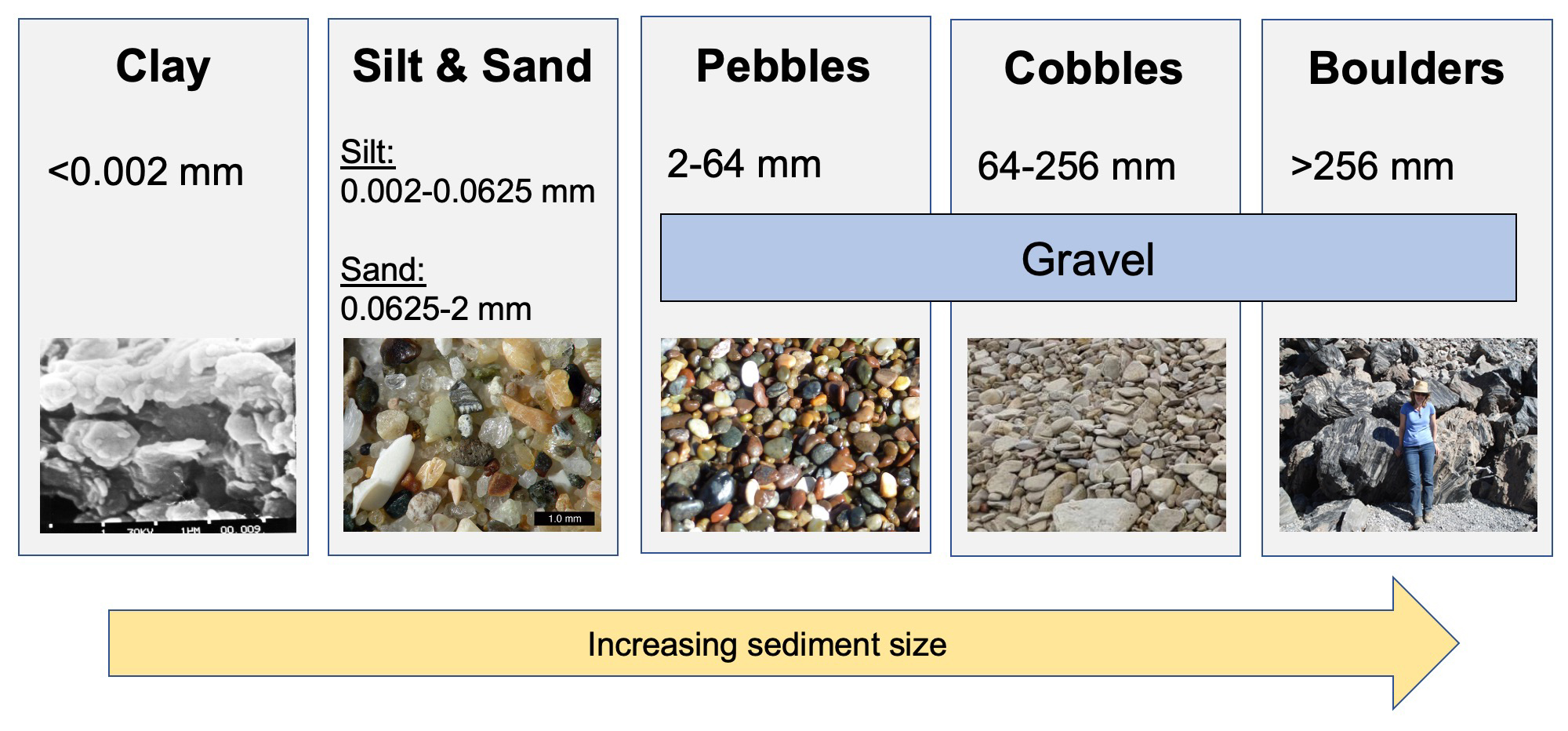
Illustration Of The Four Levels In Sedimentary Hierarchy
Sand And Silt May Be Further Modified By The Terms (Very).
Web In Hydrogeology, We Commonly Describe Sediment Size In Terms Of Phi Units (Φ), Where The Conversion To Real World Units Is:
Particle Size, Also Called Grain Size, Refers To The Diameter Of Individual Grains Of Sediment, Or The Lithified Particles In Clastic Rocks.
Web The Wentworth Scale Is A Scale For Classifying And Describing Sediments By Grain Size.
Related Post: